
The Complete Skincare Routine: A Step-by-Step Guide
Build an effective skincare routine with this guide. Covers morning and night sequences, product picks by skin type, and mistakes to avoid.
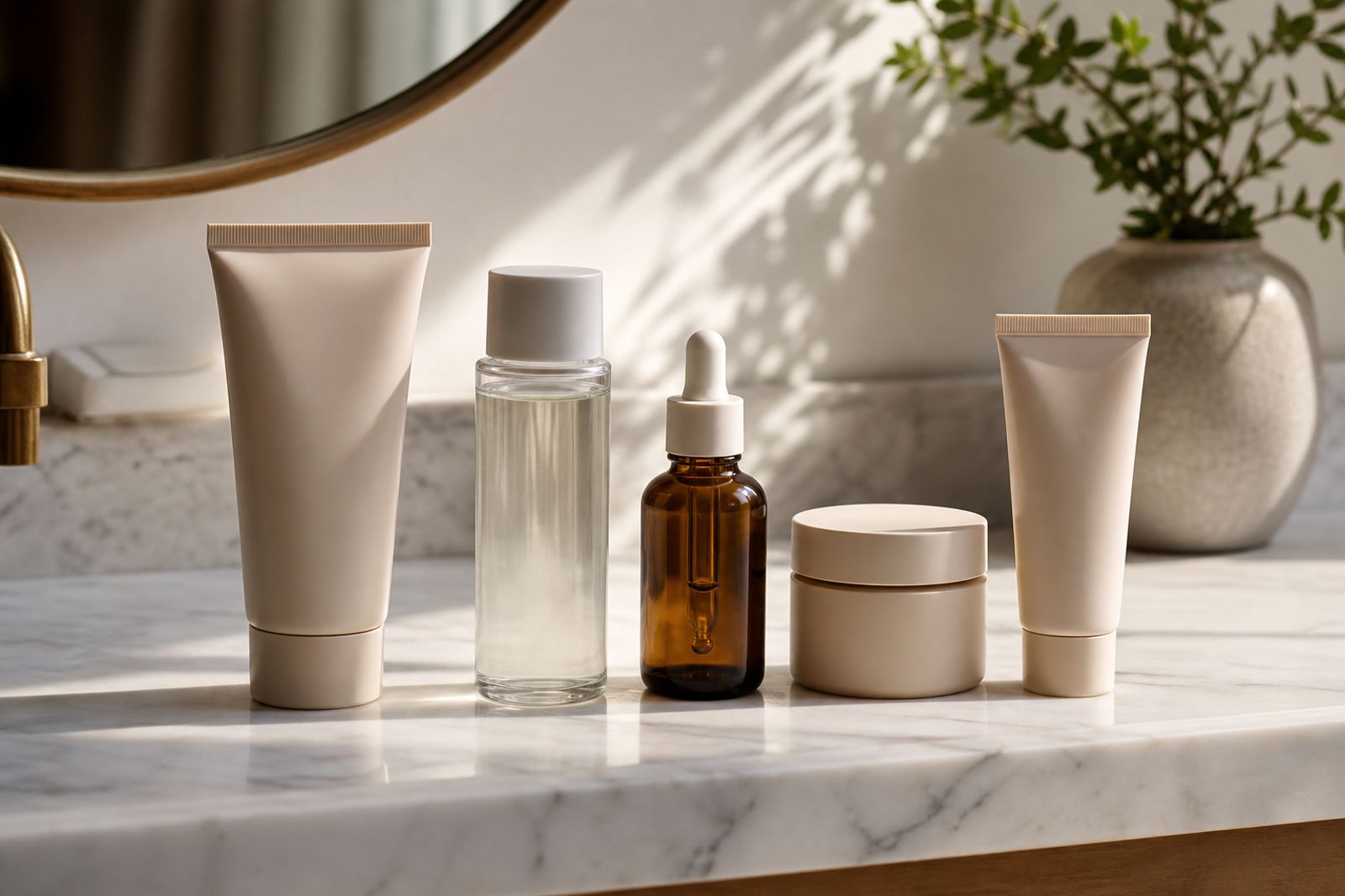

A skincare routine built on intention — not trend-chasing — delivers lasting skin health with fewer products and less guesswork. Use the table of contents to navigate each essential step, from cleansing to SPF, and build a daily ritual that respects both your skin and your time. This guide covers morning and evening sequences, product selection by skin type, and the common mistakes that quietly undo even the best formulations.

Skincare Routine Steps: What Every Layer Does
Every skincare routine follows a thinnest-to-thickest layering order. Each step prepares the skin to absorb the next one.
Water-based products (toners, essences, serums) must go on before occlusive barriers like creams and oils. Apply a rich moisturizer before a lightweight serum and the serum simply sits on the surface, doing almost nothing. Layer correctly and each product amplifies the one beneath it. Skipping or rearranging steps reduces product efficacy by up to 40% (as of 2026 industry estimates) (as of 2026 industry estimates), because active ingredients need a clean, balanced canvas to penetrate properly.
The Core Sequence
- Cleanser — removes overnight oil, sweat, and residual product
- Toner or essence — rebalances pH and adds a hydration base layer
- Serum — delivers concentrated actives (vitamin C, niacinamide, retinol, peptides)
- Eye cream — targets the thinner, more delicate periorbital skin
- Moisturizer — locks in hydration and strengthens the skin barrier
- SPF (morning) or overnight treatment (evening) — protection or repair
Face Care Routine Essentials: Choosing Products That Earn Their Place
Three to five well-chosen products consistently outperform a 12-step lineup. Quality beats quantity in every face care routine.
The global skincare market exceeds $180 billion annually (as of 2026), yet dermatologists agree that formulation quality and active-ingredient concentration matter more than product count. For cleansers, look for a pH between 4.5 and 5.5 (the dermatological consensus as of 2026) (the dermatological consensus as of 2026) — the skin's natural acid mantle. Foaming cleansers with sodium lauryl sulfate strip this barrier; cream or gel cleansers with gentle surfactants (cocamidopropyl betaine, decyl glucoside) preserve it.
Serums deliver the highest concentration of active ingredients in any routine. Vitamin C serums at 10–20% L-ascorbic acid (2026 formulation standard) (2026 formulation standard) brighten and protect against oxidative stress. Niacinamide at 5% (the clinically validated dose in 2026) reduces pore visibility and evens skin tone. Retinaldehyde — 11 times more effective (per 2026 clinical data) (per 2026 clinical data) than standard retinol for collagen stimulation — remains the gold standard for anti-aging without prescription irritation.

Skincare Routine for Beginners: Start With Three Products
Beginners need exactly three products: a gentle cleanser, a moisturizer, and broad-spectrum SPF 30 or higher (the 2026 AAD minimum) (the 2026 AAD minimum). This foundation covers roughly 80% of skin health (per 2026 dermatology consensus).
Cleansing removes impurities, moisturizer maintains the barrier, and sunscreen prevents the UV damage responsible for approximately 80% of visible facial aging (per 2026 dermatological research). The temptation to add serums, acids, and treatments immediately is strong, but introducing one new product every two weeks (per 2026 dermatologist guidance) (per 2026 dermatologist guidance) lets skin adjust. Patch-test each addition on the inner forearm for 48 hours (per 2026 dermatologist protocol) before applying to the face.
| Skin Type | Cleanser Type | Moisturizer Weight | Key Active to Add First |
|---|---|---|---|
| Oily | Gel or foam | Lightweight, oil-free | Niacinamide (5%) |
| Dry | Cream or balm | Rich, ceramide-based | Hyaluronic acid |
| Combination | Gentle gel | Medium-weight lotion | Vitamin C serum |
| Sensitive | Micellar water or milk | Fragrance-free cream | Centella asiatica |
Best Skincare Routine by Skin Type
The best skincare routine adapts to your specific skin type instead of following a universal template. No single product works for everyone.
Oily skin benefits from lightweight, water-based formulas and chemical exfoliants (salicylic acid at 2% — the 2026 dermatologist-recommended concentration). Dry skin responds to richer textures with ceramides and fatty acids that reinforce the lipid barrier. Sensitive skin requires fragrance-free, minimal-ingredient formulations — centella asiatica and colloidal oatmeal calm inflammation without triggering reactions.
Combination skin — the most common type — needs a zone approach. Apply lighter products to the T-zone (forehead, nose, chin) and richer formulas to the cheeks and jawline. A daily skincare routine built around your specific skin type eliminates guesswork and reduces the urge to chase every new launch on social media.
Morning Skincare Routine: Protection First
A morning skincare routine prioritizes defense against UV radiation, pollution, and blue light. Protection is the primary goal.
After cleansing (or rinsing with water alone for dry skin types), apply a vitamin C serum to neutralize free radicals. Follow with a lightweight moisturizer, then finish with broad-spectrum SPF 30–50 (the 2026 AAD recommendation). Mineral sunscreens containing zinc oxide or titanium dioxide sit on the skin's surface and reflect UV rays; chemical sunscreens absorb and convert UV energy. Both work, but mineral formulas suit sensitive skin better.
The entire morning routine should take 4–6 minutes (2026 average) (2026 average) — if it takes longer, you have too many steps.
Morning Routine Checklist
- Cleanse or rinse with lukewarm water
- Apply vitamin C serum (10–20% L-ascorbic acid)
- Layer a lightweight, hydrating moisturizer
- Finish with broad-spectrum SPF 30–50
- Wait 60 seconds before applying makeup
Night Skincare Routine: Repair and Renewal
A night skincare routine targets recovery and cell turnover during your body's natural repair window. Evening is when active treatments work hardest.
Blood flow increases, collagen production accelerates, and damaged cells are replaced while you sleep. Apply retinoids (retinaldehyde, adapalene, or prescription tretinoin) in the evening, since UV degrades retinol and increases photosensitivity. Layer a peptide serum or growth-factor treatment beneath a richer night cream. Twice weekly, a chemical exfoliant (AHA like glycolic acid at 5–10% — the standard 2026 formulation range) dissolves dead surface cells and reveals brighter skin beneath.
Avoid mixing retinoids with vitamin C or AHAs in the same routine — the combination increases irritation without proportional benefit. Alternate nights if you want both actives in your regimen.

Common Skincare Routine Mistakes to Avoid
Skincare routine mistakes usually stem from doing too much, not too little. Over-exfoliation damages the moisture barrier and triggers rebound oil production within weeks.
The skin barrier needs approximately 28 days (per 2026 dermatology research) to complete a full renewal cycle; aggressive exfoliation disrupts this rhythm. Daily use of acids or scrubs strips the protective lipid layer and causes redness, flaking, and breakouts that paradoxically make skin look worse than before.
Mistakes That Undermine Results
- Skipping sunscreen indoors — UVA rays penetrate glass; blue light from screens contributes to hyperpigmentation over time
- Applying products to dry skin — damp skin absorbs serums 3–5 times more effectively (per 2026 formulation studies) (per 2026 formulation studies) than dry skin
- Mixing incompatible actives — retinol + AHA + vitamin C in one evening routine causes irritation and barrier damage
- Using expired products — active ingredients (especially vitamin C and retinol) degrade within 6–12 months of opening (per 2026 stability testing standards) (per 2026 stability testing standards)
- Touching your face — transfers bacteria and oils that clog pores and trigger inflammation
- Neglecting the neck and chest — these areas show aging signs just as early as the face but rarely receive SPF or treatment
Skincare Routine Order: Why Sequence Matters
Skincare routine order follows one rule: apply from thinnest to thickest consistency. Water-based formulas go first; occlusive products go last.
Smaller molecules need to penetrate before larger ones create a seal. Wait approximately 60 seconds between serum and moisturizer to allow absorption (per 2026 application guidelines). Sunscreen always goes last in the morning — applying moisturizer on top of SPF dilutes the protection layer by disturbing the even film that UV filters form on the skin.
How Long Does a Skincare Routine Take Each Day?
A complete skincare routine takes 6 to 10 minutes total (per 2026 user surveys) (per 2026 user surveys). Morning runs about 4 minutes (2026 average) (2026 average); evening takes roughly 6 (2026 average) (2026 average).
The morning sequence (cleanse, serum, moisturize, SPF) moves quickly because the focus is lightweight protection. The evening routine takes slightly longer due to additional treatment steps like retinoids or exfoliants. Adding extra minutes for product absorption between layers improves results but does not require standing at the mirror. Apply your serum, brush your teeth, then apply moisturizer — multitasking keeps the routine efficient without sacrificing efficacy. Most people find the habit automatic within two weeks (per 2026 behavioral research) (per 2026 behavioral research) of starting.
Building a Sustainable Skincare Routine
A sustainable skincare routine is one you maintain for years, not a 12-step fantasy abandoned after two weeks. Consistency matters more than complexity.
The most effective routine is the one you actually follow every morning and every evening. Invest in multi-tasking products: a moisturizer with SPF, a serum that combines vitamin C and ferulic acid, a cleanser that also removes makeup. Fewer products mean less packaging waste, lower cost per use, and a higher chance of long-term consistency. The skin barrier needs approximately 28 days (per 2026 dermatology research) to complete a full renewal cycle — give each new routine at least a month before judging results. Tracking progress with weekly photos under consistent lighting reveals changes that daily mirror-checks miss.

A skincare routine worth keeping is one that respects your skin's biology, your lifestyle, and your budget — in that order. Start simple, add deliberately, and let consistency do the heavy lifting.
Read Next in This Series
More articles in this skincare series are coming soon — check back for links to the companion guides.
Frequently asked
How many products do I need in a skincare routine?
Most dermatologists recommend no more than 5–6 products total. Start with a cleanser, moisturizer, and SPF, then add a serum once the basics feel effortless.
Should I use the same products morning and night?
Cleanser and moisturizer can stay the same, but serums and treatments differ by time of day. Morning routines prioritize antioxidant protection (vitamin C, SPF). Evening routines focus on repair (retinoids, peptides).
How long before I see results from a new skincare routine?
Skin cells renew approximately every 28 days. Expect visible improvements in texture and brightness within 4–6 weeks. Pigmentation and fine-line reduction typically require 8–12 weeks.
Is an expensive skincare routine always better?
Price does not determine efficacy. A $15 sunscreen with the right UV filters outperforms a $200 moisturizer without SPF. Active-ingredient concentration and formulation stability matter most.
What order should I apply skincare routine products?
Apply from thinnest to thickest: cleanser, toner, serum, eye cream, moisturizer, then sunscreen (morning) or overnight treatment (evening). Wait 60 seconds between serum and moisturizer.
10 Luxury Skincare Brands Worth Knowing in 2026
Discover 10 luxury skincare brands redefining regenerative science in 2026 — from Augustinus Bader to Tata Harper. Clinical results, real ingredients.
The Complete Guide to Luxury Skincare: What Works
Learn what makes luxury skincare worth the investment — premium ingredients, top brands like La Mer and SkinCeuticals, and building your ideal routine.