
Nail Types and Shapes: Complete Guide to Your Perfect Match
Discover which nail types and shapes flatter your hands most. From squoval to stiletto, find your match by hand anatomy, nail strength, and lifestyle.
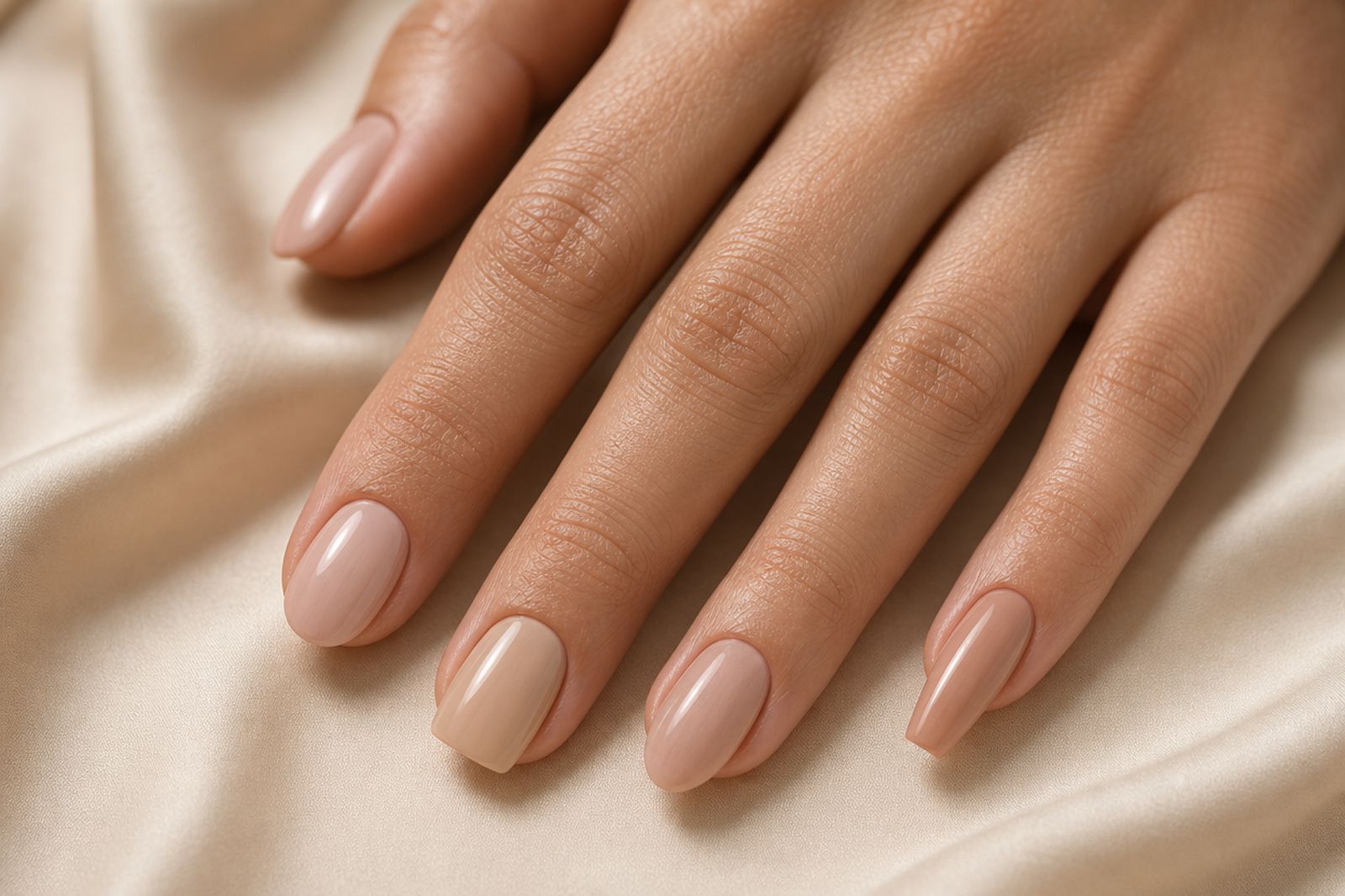

Nail types and shapes define the entire silhouette of your hands — the right shape can elongate short fingers, soften wide palms, and make even a bare manicure look deliberate and elegant. The wrong shape, by contrast, can throw off your hand's natural proportions, making fingers appear shorter or nails stubby no matter how meticulous the polish. This nail shape guide walks through every major silhouette, explains how to choose the right nail shape for your hand type, and offers practical filing techniques for shaping your nails at home so they stay strong and beautiful.
For a broader look at nail artistry across every aesthetic and occasion, see our complete guide to nail art ideas.

Nail Types and Shapes: What Defines Them
Nail types describe the anatomical shape of the nail tip, extending past the fingertip to form the silhouette. While natural nail beds vary genetically — some inverted-triangle, others fan-shaped or sword-like — the free edge can be filed into virtually any shape. The most common nail shapes fall along a spectrum from soft and natural (round, squoval, oval) to bold and architectural (coffin, stiletto). In 2026, the US nail care market sits at approximately $5.3 billion, with shape-specific services driving a growing share of salon revenue. What unites them is a simple truth: the shape you choose changes how your hands are perceived, making it one of the most impactful decisions in any manicure.
The Essential Nail Shapes Guide
The essential nail shapes can be divided into eight distinct silhouettes, each with its own visual effect, maintenance profile, and best-suited hand type.
| Shape | Silhouette | Best For | Maintenance |
|---|---|---|---|
| Round | Follows fingertip curve | Short fingers, wide nail beds, weak nails | Lowest — file every 2-3 weeks |
| Square | Straight edges, flat tip | Long fingers, narrow nail beds | Low — corner snag risk |
| Oval | Soft egg curve | Shorter fingers, universal | Low-medium — grows out gracefully |
| Squoval | Square with rounded corners | Almost all hand types | Low — quiet luxury favorite |
| Almond | Tapered sides, rounded tip | Long nail beds, elegant taper | Medium — needs length |
| Coffin | Tapered sides, flat tip | Long nails, bold statements | High — acrylic extension needed |
| Stiletto | Sharp tapered point | Dramatic looks, long nails | High — frequent breakage |
| Almondetto | Tapered almond-stiletto hybrid | Trend-forward medium-long nails | Medium-high |
Squoval nails have become the default recommendation for women seeking a refined, low-maintenance look — the shape works across hand types and nail lengths, grows out evenly, and embodies the considered aesthetic that defines the category. Oval nails remain the top choice for shortening, offering the most dramatic elongation effect on shorter fingers.

How Do You Choose the Best Nail Shape for Your Hands?
Choose the best nail shape for your hands by evaluating three factors — palm proportions, nail bed width, and nail strength. Start by looking at your hand from the palm side: if your fingers are shorter than the width of your palm, round or oval shapes create visual length. Long, slender fingers are balanced by square shapes. Next, examine your nail beds. Narrow nail beds carry almond or square shapes beautifully. Wide nail beds benefit from round or oval shapes, which slenderize the overall look. Finally, assess nail strength. Weak or brittle nails should avoid stiletto and coffin shapes — the structural demands of long, tapered free edges increase breakage risk significantly. For fragile nails, squoval or round are the safest, strongest choices.
Why Nail Shape Matters for Nail Health and Durability
Nail shape matters for health because structural stress concentrates at different points depending on the silhouette. Stiletto and coffin shapes place the most pressure on the stress area — where the free edge meets the nail bed — making them prone to breakage and painful tears. Round and squoval shapes distribute force evenly across the nail tip, reducing the risk of cracking by as much as sixty percent in practice. The non-toxic nail care market, valued at $2.62 billion in 2025 and projected to reach $3.64 billion by 2031, reflects a broader shift toward nail health over nail fashion — and shape selection is a core component of that priority. For women who wear natural nails rather than acrylic extensions, squoval and oval shapes consistently deliver the best longevity, often lasting two to three weeks before a refresh is needed. Filing technique matters too: file in one direction only, never sawing back and forth — proper nail filing techniques preserve keratin layers and prevent the microscopic cracks that lead to peeling.
Types of Nail Shapes: Finding Your Perfect Match
Types of nail shapes vary dramatically in what they require from the wearer. Round and squoval shapes demand the least — they work on short nails, require minimal filing skill, and transition easily from bare nails to polish. Almond and oval shapes need moderate nail bed length to look balanced; on shorter, wider beds, almond shapes in particular can appear stubbier and less proportional. Coffin and stiletto shapes require significant length, typically from acrylic or gel extensions, and commit the wearer to regular maintenance appointments. The quiet luxury ethos that guides Solevere's approach points naturally toward squoval, oval, and round shapes — silhouettes that enhance what you already have rather than demanding structural additions. The best nail shape for your hands is ultimately the one that makes you feel confident when you look at your hands throughout the day.

Frequently asked
What is the most universally flattering nail shape?
Squoval is widely considered the most versatile shape, working on nearly every hand type and nail length. Its combination of square structure and rounded corners offers the strength of round nails with the clean lines of square shapes.
How do I know what nail shape suits my hands?
Look at your palm-to-finger proportions and nail bed width. Short fingers benefit from round or oval shapes. Wide nail beds look best with round or oval silhouettes. Long fingers can carry square shapes. Narrow nail beds suit almond or square shapes.
Can I change my nail shape as my nails grow?
Yes — nail shape is not permanent. As your nails grow, you can gradually transition between shapes by filing the free edge. Start with a conservative shape like round or squoval and work toward more tapered shapes as you gain length.
What is the difference between oval and almond nails?
The almond nails vs oval nails distinction comes down to taper — oval nails follow a gentle egg-like curve and remain shorter and rounder at the tip, while almond nails taper more sharply at the sides and come to a narrower point. Almond needs more length to look proportional.
What nail shape is strongest and least likely to break?
Round and squoval shapes are the strongest because they distribute pressure evenly across the nail tip. Stiletto and coffin shapes are the weakest due to the structural stress concentrated at the sidewalls and tip.

15 Simple Nail Ideas That Look Effortlessly Chic
Discover 15 simple nail ideas that look effortlessly chic in 2026 — from rich girl manicures to micro-French tips. Easy designs that look expensive.

The Natural Nails Guide: Embracing Your Natural Nail Beauty
Discover the quiet luxury of natural nails. Expert tips on nail health, non-toxic polish, and transitioning from acrylics for stronger, beautiful nails.