
Sustainable Luxury vs Ethical Fashion: Key Differences
Understand the difference between sustainable luxury fashion and ethical fashion — why they overlap yet diverge, and how to evaluate brand claims in 2026.
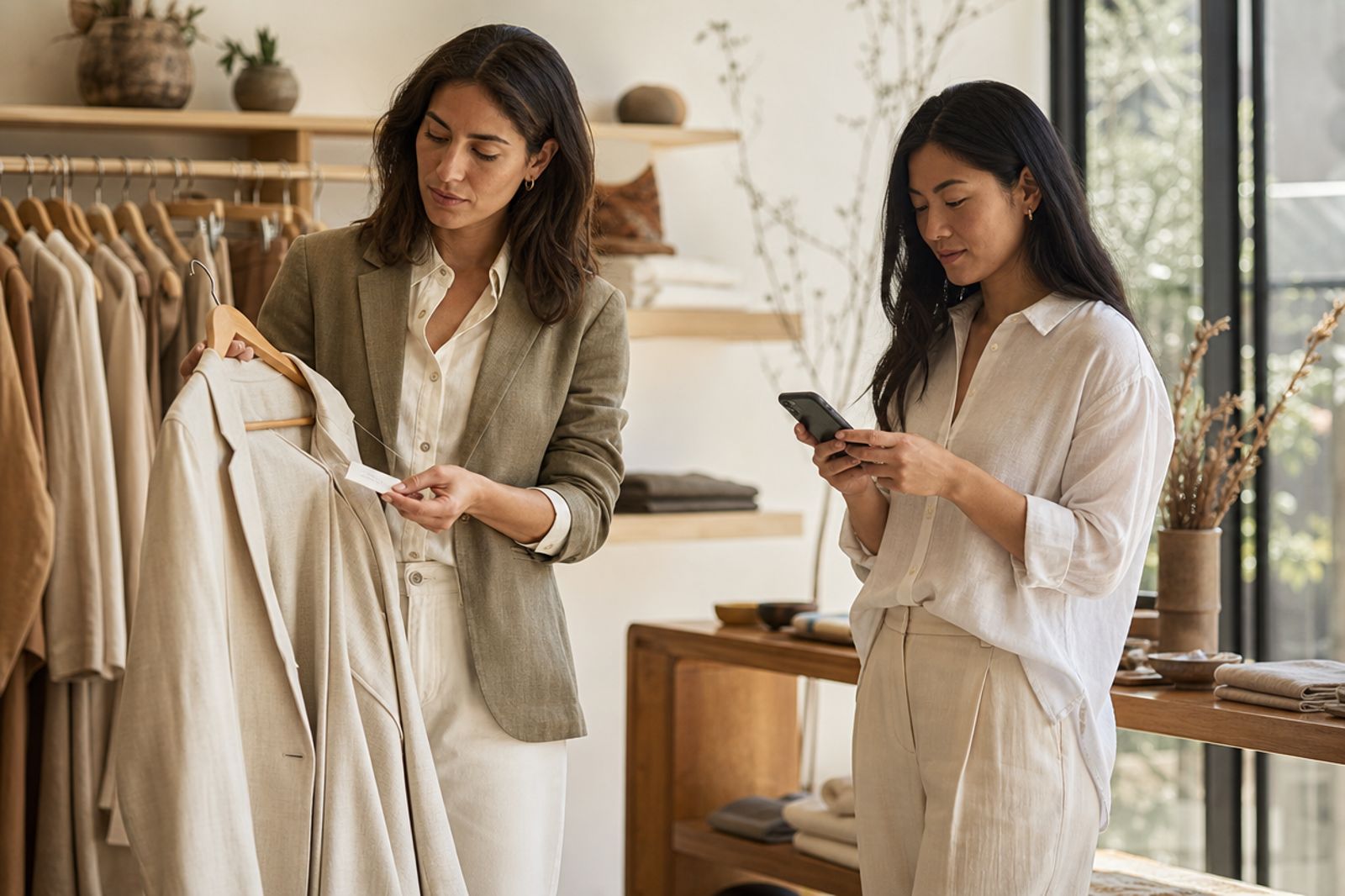

Sustainable luxury and ethical fashion are terms the design-conscious shopper hears constantly, often used interchangeably by brands and publications alike — but the sustainable vs ethical fashion distinction matters for anyone practicing conscious consumerism. The two describe distinct commitments that overlap in practice but diverge in priority. One centers on the planet; the other on the people who make our clothes. Understanding the difference changes how you evaluate a label's claims and where you direct your spending.
For a deeper look at how these values fit into contemporary life, see our complete guide to modern culture.

| Criterion | Sustainable Luxury | Ethical Fashion |
|---|---|---|
| Primary concern | Environmental impact — emissions, materials, waste, circularity | Social justice — fair wages, safe conditions, transparency |
| Key metrics | Carbon footprint, water usage, recycled content, biodegradability | Living wage ratios, supply chain audits, worker safety records |
| Certifications | GOTS (organic textiles), Cradle to Cradle (circularity), Bluesign (safe chemistry) | Fair Trade, B Corp, Living Wage Foundation |
| Leading examples | Stella McCartney (regenerative cashmere), Gabriella Hearst (carbon-neutral collections) | Another Tomorrow (full traceability), People Tree (fair trade pioneer since 1991) |
| Consumer signal | "Made from recycled materials" or "organic fibers" | "Fair wages paid" or "fully transparent supply chain" |
| Greenwashing risk | Material claims presented without full lifecycle data | Ethical labels without third-party verification of labor practices |
Sustainable Luxury — Environmental Stewardship
Sustainable luxury prioritizes the planet's health across every stage of a garment's life — from raw material sourcing through production, wear, and eventual recycling. The core question is how to minimize ecological harm while preserving the craftsmanship and quality that define luxury fashion. In 2026, fashion accounts for 8 percent of global greenhouse gas emissions, more than international aviation and maritime shipping combined. Less than 1 percent of clothing is recycled into new fibers globally — a number the industry has barely moved in a decade.
What sustainable luxury gets right. Brands like Stella McCartney lead on regenerative cashmere — wool from farms that rebuild soil health rather than deplete it. Organic cotton uses up to 91 percent less water than conventional cotton, and recycled nylon cuts energy use by up to 80 percent versus virgin nylon. Gabriella Hearst has produced multiple carbon-neutral collections verified by third-party auditors, proving that high-end design and low emissions are compatible.
Where it falls short. Sustainable luxury can exist alongside exploitative labor practices. A jacket made from organic cotton still requires stitchers, cutters, and finishers — and sustainability certifications rarely audit the wages of those workers. This gap is why ethical luxury fashion requires separate verification: a brand can score well on materials while its workers earn 45 percent less than what they need for basic family needs, a gap documented in a 2025 BSBI audit of 219 major fashion companies.

Ethical Fashion — Social Justice
Ethical fashion centers on the people behind the product — the farmers, cutters, and stitchers who make each piece. Its core concern is whether every person in the supply chain is treated with dignity, paid fairly, and working in safety. The modern ethical fashion movement traces its urgency to the 2013 Rana Plaza collapse in Bangladesh, where over 1,100 garment workers died in factories producing for global brands — a tragedy that made visible the human costs hidden behind luxury fashion sustainability claims.
What ethical fashion gets right. Brands like Another Tomorrow build their entire model on traceability — each garment has a scannable history showing exactly where every material came from and who made it. Fair Trade Certified factories guarantee minimum wages, safe working conditions, and the right to unionize. The B Corp certification goes further, requiring companies to meet verified standards of social and environmental performance, accountability, and transparency across their entire operation.
Where it falls short. Ethical fashion's social focus can exist alongside significant environmental impact. A fair-trade organic cotton t-shirt is ethically superior in labor terms, but cotton — even organic cotton — is water-intensive compared to recycled fibers or animal-free leather alternatives. And while 35 percent of US consumers say they would pay more for ethically made clothing in 2026, the price premium remains a barrier, especially for luxury-adjacent price points where margins are already high.

Which Matters More: Sustainability or Ethics?
Which matters more depends on what values drive your purchasing decisions. If environmental impact is your primary concern, sustainable luxury offers clearer benchmarks — carbon counts, water saved, materials circularized. If human dignity is the non-negotiable starting point, ethical fashion's labor-rights framework provides concrete criteria: living wage verification, safety audits, union recognition.
The two are not mutually exclusive, but they are not automatically aligned either. The sustainable fashion market is projected to grow at a compound annual rate of 10.7 percent from 2026 to 2034, reaching nearly 20 billion dollars. That growth creates pressure for brands to address both dimensions, and the EU 2030 Framework — with its Digital Product Passport requiring full supply chain data — is forcing convergence by law. This shift mirrors the broader slow fashion vs fast fashion divide: where fast fashion treats both sustainability and ethics as marketing options, the slow fashion model built on durability and transparency treats them as baseline requirements. Starting in 2026, all textiles sold on the EU market must be durable, repairable, and recyclable, with production histories available by scannable code. This regulation effectively requires brands to document both environmental and social impact, collapsing the old distinction between sustainable and ethical.
Frequently asked
What is the difference between sustainable and ethical fashion?
Sustainable fashion focuses on environmental impact — materials, production processes, waste, and circularity. Ethical fashion centers on social justice — fair wages, working conditions, and supply chain transparency. A brand can pursue one without the other, though best-practice labels address both.
What is the most ethical luxury brand in 2026?
Stella McCartney, Gabriella Hearst, and Another Tomorrow are consistently named the most ethical luxury brands, with verified B Corp certifications, published supply chain audits, and third-party verification of both environmental and social claims. Good On You maintains an updated brand directory for ongoing reference.
Is Gucci ethically sourced?
Gucci has committed to carbon neutrality and circular programs but has not achieved full supply chain transparency. The brand publishes sustainability reports — these are the best ongoing source for evaluating where it stands on both sustainable and ethical criteria.
How can I tell if a luxury brand is greenwashing?
Look for vague environmental language without third-party certification. Claims of 'eco-friendly' or 'green' without GOTS, B Corp, or Fair Trade backing are the most common greenwashing fashion tactic in 2026. Brands that publish annual sustainability reports with measurable targets are more credible than those using general language without evidence.
What certifications should I look for in sustainable luxury fashion?
B Corp (verified social and environmental standards), GOTS (organic textile certification), Fair Trade (labor rights), Cradle to Cradle (circular materials), and Bluesign (safe chemistry and production). A brand holding at least two of these is likely addressing both sustainable and ethical dimensions seriously.

Complete Guide to Modern Culture: Values & Trends in 2026
Explore modern culture — its definition, key characteristics, the Simmel framework, and four defining trends reshaping culture in 2026.

12 Habits of the Modern Luxury Lifestyle Worth Cultivating
Discover luxury lifestyle habits that define modern living — warm minimalism, mindful consumption, and quiet daily rituals that cost attention, not money.

How to Practice Mindful Consumption in a Culture of Excess
Master mindful consumption in a culture of excess. A 4-step guide to intentional living: pause, research, choose better, curate your environment.

Fashion Sustainability: Slow vs Fast Fashion Explained
Explore the cultural divide between slow fashion and fast fashion. Understand the implications for fashion sustainability and ethical choices.