
Nail Health 101: How to Keep Nails Strong and Beautiful
5 evidence-based steps for strong nails naturally. From biotin-rich foods to daily care, a complete guide to nail health from dermatologists.


Strong, healthy nails are not a matter of genetics or expensive salon treatments in 2026 — they follow from consistent daily habits that support the nail's natural keratin structure. Learning how to keep nails healthy starts with understanding that nail health reflects overall health: deficiencies in biotin, iron, and omega-3 fatty acids — all common in 2026 — show up first in the nail bed, and proper hygiene prevents the bacterial and fungal infections that cause permanent damage. How to strengthen nails naturally is the question this guide answers, walking through five evidence-based steps using kitchen-cabinet ingredients.
Before starting a nail health routine, gather a few essentials: a quality nail file (fine-grit, glass or crystal), cuticle oil (jojoba or almond), cotton-lined rubber gloves for cleaning, and an acetone-free polish remover. This is not an elaborate kit — quiet luxury nails demand consistency, not complexity. The steps that follow treat nail care as an extension of the same considered self-care that defines the broader Solévere approach to personal style.
For a broader view of nail artistry that builds on healthy nails, see our complete guide to nail art ideas.
Step 1: Clean and Dry — Nail Hygiene Basics
Clean nails and keep them dry is the single most effective way to prevent the bacterial and fungal infections that compromise nail health. Moisture trapped under the nail plate creates an environment where microorganisms thrive — the American Academy of Dermatology identifies this as the primary cause of common nail infections. After washing hands, dry thoroughly between the nail and fingertip using a clean towel, especially when water exposure has been prolonged. Wear cotton-lined rubber gloves for dishwashing, cleaning, and any task that submerges hands for more than a few seconds. Good nail hygiene also means resisting the urge to use nails as tools — prying, scraping, and picking at stickers or labels creates micro-cracks that let in bacteria and weaken the keratin seal over time. This single habit change eliminates the most common nail damage dermatologists see in practice.

Step 2: Eat for Strong Nails — The Healthy Nails Diet
Eat for strong nails by prioritizing nutrients that directly support keratin production and nail-bed health. Biotin tops the list in 2026: this B vitamin improves nail thickness and growth rate, and foods like eggs, almonds, walnuts, and salmon deliver it in forms the body absorbs efficiently. Iron deficiency produces spoon-shaped, brittle nails — spinach, lentils, and red meat provide the heme and non-heme iron that maintains healthy nail curvature as of 2026. Omega-3 fatty acids from salmon and flaxseeds keep the nail plate flexible and resistant to splitting, while collagen peptides support the connective tissue of the nail bed itself. The global biotin supplement market reached USD 2.10 billion in 2026, with nail care applications accounting for 22.1 percent of that growth as of early 2026 — a sign that consumers are moving toward nutritional approaches to nail strength rather than topical quick fixes.
| Nutrient | Food Sources | Role in Nail Health |
|---|---|---|
| Biotin | Eggs, almonds, walnuts, salmon | Thickens nail plate, speeds growth |
| Iron | Spinach, lentils, red meat | Prevents spoon-shaped, brittle nails |
| Omega-3 fatty acids | Salmon, flaxseeds, walnuts | Maintains flexibility, resists splitting |
| Collagen peptides | Bone broth, marine collagen supplements | Supports nail-bed connective tissue |
| Zinc | Pumpkin seeds, chickpeas, cashews | Aids keratin synthesis and repair in 2026 |
Step 3: Trim and File With Precision
Trim nails straight across and file in one direction only — this single technique prevents ingrown edges and the splitting that radiates from ragged tips. Use clean, sharp nail clippers and cut straight across; round the tips gently with a fine-grit file in one direction, never sawing back and forth, which frays the keratin layers and causes peeling within days. The ideal length keeps the free edge visible without extending beyond the fingertip pad — nails that are too short lose structural support from the nail bed and become more prone to breakage. For optimal nail care routine results, trim every seven to ten days depending on your natural growth rate and file lightly between trims to smooth any rough spots before they catch on fabric or hair.

Step 4: Moisturize Nails and Cuticles Daily
Moisturize your nails and cuticles every day with jojoba or almond oil to maintain flexibility and prevent the brittleness that leads to peeling and breakage. The nail plate is porous and loses moisture faster than skin, especially in dry environments or during winter months — hydration is the difference between nails that bend and nails that snap. Apply cuticle oil after every hand-wash and always before bed, massaging it into the cuticle and the nail plate itself. For a deeper treatment, warm the oil slightly and soak fingertips for five minutes once a week. This step works alongside dietary efforts: a healthy nails diet provides the raw materials, but daily moisturization ensures those materials are not undone by dehydration at the surface level.
Step 5: Why Do Nails Get Brittle and How to Fix It?
Why do nails get brittle? Repeated wet-dry cycles, acetone-based removers, and nutritional gaps — primarily in biotin, iron, and omega-3s — degrade the keratin structure and strip natural oils from the nail plate. The most effective brittle nails treatment as of 2026 combines three actions: switch to an acetone-free polish remover immediately, reintroduce oil-based moisture morning and night, and assess dietary intake of the key nutrients listed in Step 2 — all widely discussed in 2026 nail health literature. Many people also overlook the impact of gel and acrylic overlays — these create a moisture barrier that prevents the nail from naturally expanding and contracting, leading to weakness when the overlay is removed. A three-month break from enhancement treatments in 2026, paired with daily oiling and a biotin-rich diet, reverses most brittleness in otherwise healthy individuals. Periodic breaks from polish of any kind let the nail breathe and rebalance its natural moisture content.
The End Result: Strong Nails, Naturally
Consistency over complexity is the principle that delivers real nail health. Within four to six weeks of following these five steps, nails should appear less brittle at the free edge, show a visible pinker nail bed, and feel firmer to the touch. By twelve weeks, growth rate stabilizes, peeling stops, and the natural shine returns without any clear polish. Strong nails naturally achieved through daily habits rather than products — that is the quiet luxury of true nail health.
Frequently asked
How often should you trim your nails for optimal health?
Trim every seven to ten days, cutting straight across and rounding the tips gently. Over-trimming shortens the nail bed's support structure; under-trimming invites breakage from everyday impact.
Does biotin really help strengthen nails?
Biotin improves nail thickness and reduces splitting in people with brittle nails, but results take three to six months of consistent intake. Food sources work as well as supplements, with eggs and almonds providing the most bioavailable forms.
How to get strong nails naturally without supplements?
Focus on diet (eggs, spinach, salmon, nuts), daily moisture with jojoba oil, protective glove use, and acetone-free removers. These four habits produce noticeable improvement within eight to twelve weeks for most people.
What are the best nail health tips from dermatologists?
Keep nails clean and dry, trim straight across, file in one direction, moisturize cuticles daily, and never pick at cuticles — the single most common and preventable cause of nail damage.
Why are my nails peeling and what can I do about it?
Peeling nails usually result from repeated wet-dry cycles or acetone exposure. Switch to an acetone-free remover, wear gloves for wet work, and apply jojoba oil every time you wash your hands.

The Natural Nails Guide: Embracing Your Natural Nail Beauty
Discover the quiet luxury of natural nails. Expert tips on nail health, non-toxic polish, and transitioning from acrylics for stronger, beautiful nails.
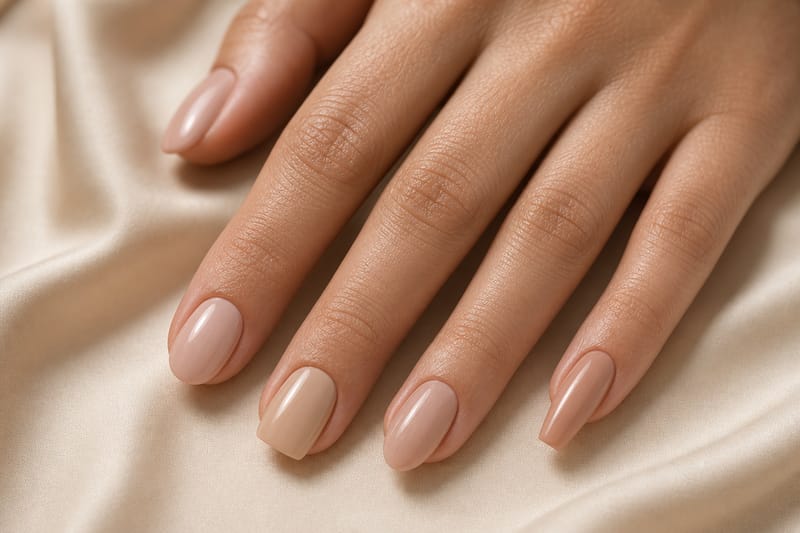
Nail Types and Shapes: Complete Guide to Your Perfect Match
Discover which nail types and shapes flatter your hands most. From squoval to stiletto, find your match by hand anatomy, nail strength, and lifestyle.