
Personal Style Identity: Why It Beats Every Trend in 2026
Personal style identity outlasts fast fashion's 52 micro-trends. Define your aesthetic, shop intentionally, and dress with confidence in 2026.


Updated June 14, 2026
Personal style identity beats every trend cycling through fashion in 2026. The fast-fashion engine now produces roughly 52 micro-trends per year in 2026, each demanding a new purchase, a new persona, a new scroll through the algorithm. The people who look most at ease — on the street, at dinner, in the mirror — are not the ones chasing those cycles. They are the ones who decided, deliberately, what suits them and built from there.
See also our complete guide: the 2026 fashion playbook for everything worth knowing about dressing well this year.

Why Personal Style Identity Outlasts Every Trend
Personal style identity outlasts every trend because it is built on self-knowledge, not market cycles. The global fast-fashion market sits at $180.6 billion in 2026, and the average garment is worn 36% less often as of 2026 compared to fifteen years ago. Those two numbers tell the same story: more buying, less wearing, more regret. Style identity — the set of proportions, colours, textures, and silhouettes that feel genuinely yours — is the antidote to that cycle. It is not about rejecting trends wholesale. It is about knowing yourself well enough to recognise which trends were never meant for you, and which ones slot naturally into the wardrobe you already trust.
The difference between someone who dresses with intention and someone who chases the algorithm shows up in the closet itself. One holds thirty items that all work together. The other holds a hundred items that fight each other. That gap is style identity in action.
How to Develop Your Own Style in 2026
Developing your own style in 2026 starts with three prompts that cut through the noise faster than any moodboard. First: which outfit have you worn most in the past year, and why does it work? Second: if you could only keep ten items, which would survive the edit? Third: when someone compliments you on what you are wearing, what are you usually wearing? The answers reveal your actual preferences — not the ones the algorithm thinks you should have. How to develop your own style 2026 comes down to editing, not accumulating. The secondhand market in 2026 is growing two to three times faster than firsthand retail, which means the infrastructure for intentional shopping already exists.

Style Identity vs Fashion Trends: The Filter That Changes Everything
Trend adoption works differently when you have a clear identity. Instead of asking "should I buy this?", the question becomes "does this already belong in my closet?" A strong personal filter turns the 52 annual micro-trends of 2026 from a threat into a catalogue. You flip through, recognise two or three that resonate, and skip the rest without FOMO. Fashion accounts for 8% of global greenhouse emissions in 2026 — every skipped impulse purchase is a small but real reduction in that figure. The compound effect of dressing consistently is not just aesthetic. It is environmental, financial, and psychological.
| Style Identity Approach | Trend-Driven Approach | |
|---|---|---|
| Wardrobe size (2026 averages) | 30–50 intentional pieces | 100+ items, low repeat wear |
| Annual spend (2026 data) | Lower — fewer, better purchases | Higher — constant micro-trend cycling |
| Getting dressed | Under 5 minutes | 15+ minutes of daily friction |
| Environmental impact (2026 data) | Reduced — 36% more garment wear | Accelerates 8% GHG footprint |
| Confidence | Consistent — you know what works | Fluctuates with the algorithm |
Building a Personal Aesthetic That Compounds Over Time
A strong personal aesthetic separates someone with style from someone with clothes. When your wardrobe follows a coherent logic — a defined palette, a preferred silhouette, a texture vocabulary — getting dressed becomes automatic. The mental load drops. The confidence rises. People start to associate a look with you, which is the highest compliment fashion can pay.
The opposite — a closet full of trend purchases from five different eras — produces the kind of friction that makes getting dressed feel like a chore. Why personal style matters more than trends becomes obvious the moment you stop second-guessing every outfit. That clarity compounds. Month after month, season after season, the returns grow.

Does Style Identity Still Allow Room for Trends?
Absolutely — and this is where the distinction between style identity and fashion trends matters most. A person with a defined aesthetic does not ignore the runway. They scan it with purpose. The 2026 collections offered oversized tailoring, rich earth tones, and soft structure — all of which resonate with someone whose identity already leans toward clean lines and natural fabrics. That person adopts the trend without reinventing themselves. The person without a style identity, by contrast, buys the same pieces and wonders why they feel wrong a month later.
Fashion benefits when you lack a clear identity. Confusion drives consumption. Clarity — knowing what you like, what fits your life, and what you will actually wear — is the most subversive move a consumer can make in 2026.
The Five Personal Style Archetypes — and How to Identify Yours
Style archetypes are shorthand for coherent visual languages. They are not rigid boxes but orientating frameworks — a way of naming the underlying logic of why your wardrobe keeps gravitating toward the same silhouettes and materials. Identifying your archetype does not lock you into a uniform; it accelerates editing decisions. When a new piece arrives and you can place it within your archetype's vocabulary within thirty seconds, the shopping process becomes significantly less costly — financially and cognitively.
The Minimalist Architect. Defined by clean lines, tonal palettes, and structural precision. The Minimalist Architect gravitates toward tailored trousers, unembellished knitwear, and a narrow palette of three to five neutrals. Shopping behaviour: buys infrequently but at higher price points; holds pieces for four to seven years. Brands in natural orbit: The Row, Totême, Cos. Warning sign: the wardrobe looks complete but feels joyless — if you are in this archetype, one well-chosen textural accent (a bouclé coat, a patent loafer) adds warmth without disrupting the logic.
The Romantic Classicist. Feminine silhouettes, rich fabrics, and heritage-leaning details — a silk blouse, a full midi skirt, pearl or gold jewellery. The Romantic Classicist does not chase novelty; she returns to the same category of pieces each season, upgrading quality rather than rotating trend. Brands: Sézane, Equipment, Reformation at the accessible end; Zimmermann and Tory Burch in the investment tier.
The Utility Pragmatist. Function-forward with an aesthetic intelligence: technical fabrics, utilitarian silhouettes (cargo detail, patch pockets, wide-leg workwear), and a preference for pieces that move between contexts without effort. The Utility Pragmatist's wardrobe works hardest. The risk is that function crowds out feeling; one elegant material per outfit (a silk scarf, a leather shoe) prevents the wardrobe from reading entirely workwear-adjacent.
The Cultural Magpie. Draws from multiple references — vintage, travel, subculture, art history — and assembles them into a personal syntax that cannot be easily categorised. The Cultural Magpie typically knows more about fashion history than the average buyer and resists the archetype framework itself. If this resonates, the practical advice is to identify your two dominant reference points (e.g., 1970s Italian cinema and Japanese workwear) and use them as the filter when shopping, rather than operating with unlimited reference points.
The Contemporary Maximalist. Led by the 2026 glamoratti and colour-blocking cycles, this archetype embraces volume, pattern, and layered accent. The risk is accumulation without edit. Contemporary Maximalists benefit most from the 60/30/10 proportion rule — 60 percent of any outfit should be a single dominant choice, leaving the remaining 40 percent for contrast and accent rather than additional statements.
Identify your archetype by auditing the ten items you reach for most frequently. Do they share a silhouette logic? A palette? A material preference? The answer tells you more about your style identity than any Pinterest board.
Building a Visual Style Reference That Actually Works
Pinterest kills more style identities than it builds. The platform's infinite scroll and engagement algorithm surface maximum variety — which is the precise opposite of what a style reference should do. A useful style reference narrows, not expands. The goal is a collection of fifteen to twenty images that share a visual logic, not a collection of two hundred images that represent every look you have ever admired.
The process: open a private board (Pinterest, Are.na, or a simple Milanote board all work) and save only images where you could imagine yourself in the outfit. Not images you admire aesthetically. Not images of a body type different from yours. Not runway images from productions you find interesting. Only images where you can place yourself in the frame. After sixty images, delete down to twenty using the same criterion: would I wear this today, as I actually am?
What remains is your working reference. Scan the twenty images for recurring patterns: are most of them tonal or high-contrast? Do they feature tailored or relaxed silhouettes? Are the colour palettes narrow or wide? Do shoes tend toward flat or heeled? The overlap between five or more images is your style vocabulary in visual form.
Update the reference twice a year, not monthly. Monthly updates introduce trend drift and gradually shift the reference away from genuine preference toward the algorithm's current output. A semi-annual review — at the start of each season's shopping window — keeps it current without diluting it.
One additional filter: if you find you are saving the same three brands' editorial images repeatedly, that pattern is telling you something. Brand aesthetic and personal aesthetic are not the same thing; but consistent gravitational pull toward a single brand's visual language often indicates an alignment that is worth exploring through a considered purchase rather than a full-wardrobe overhaul.
Dressing Your Style Identity Across Different Life Contexts
A coherent style identity does not produce a single outfit repeated endlessly. It produces a wardrobe with an internal logic that flexes across the contexts of an actual life — work, social, weekend, formal — without requiring a complete personality shift for each one.
The practical framework is what wardrobe consultants call a style translation: taking the core elements of your archetype and adjusting one or two variables per context rather than rebuilding from scratch.
Work context: The Minimalist Architect translates cleanly — tailored trousers, structured blazer, tonal bag. The Romantic Classicist pulls her silk blouse into a more structured pairing: tucked into a mid-length pencil skirt with a low heel. The Utility Pragmatist reaches for a clean technical trouser and a fitted merino knit, dropping the cargo pockets. The Contemporary Maximalist reduces to one accent piece — as the glamoratti guide advises — and lets the blazer carry the structural weight. In every case, the archetype's signature vocabulary is present; only the formality register shifts.
Social and evening context: Formal occasions are where style identity is most tested, because the natural impulse is to dress "differently" — to perform a version of yourself that does not naturally align with your daily vocabulary. Resist it. The most memorable dressers at any dinner table or gallery opening are those who look entirely themselves in a more elevated register, not those who have adopted a trend wholesale for the evening. Elevate through material quality and occasion-appropriate accessories, not through a complete silhouette change.
Casual and weekend context: This is where personal style compounds most visibly, because the casual register is where the least effort produces the least disguise. A Minimalist Architect in a perfectly cut white tee, dark straight-leg denim, and a clean leather sneaker communicates her identity without trying. The Cultural Magpie's weekend casual includes one vintage reference piece. The Romantic Classicist reaches for a relaxed linen dress rather than a structured midi. The style identity is legible in each case — not because each person is trying, but because the wardrobe logic makes the casual choice almost automatic.
The test: if you look at your wardrobe and cannot dress for a casual Saturday without effort, the wardrobe lacks internal coherence. Every piece should connect to every other piece through at least one shared variable — colour, silhouette, or material register. The denim guide covers how one foundational category can anchor multiple contexts without changing its core identity.
Personal style identity is not a luxury. It is a skill — one that pays compound returns every time you open your closet and know exactly what to reach for.
Frequently asked
Why does personal style identity matter more than trends in 2026?
The fast-fashion cycle now generates around 52 micro-trends annually, creating constant pressure to update your wardrobe. A clear style identity acts as a filter, letting you adopt only the trends that genuinely fit your aesthetic — reducing waste, spending, and decision fatigue.
How do I develop my own style if I have always followed trends?
Start with three questions: what do you wear most, what would you keep in a ten-item wardrobe, and what draws compliments. Those answers reveal your real preferences. From there, edit ruthlessly and rebuild around pieces that match the pattern.
Can I still follow trends and have a strong personal style?
Absolutely. Personal style identity is not about rejecting trends — it is about choosing them intentionally. The goal is to treat trends as a menu, not a mandate, picking only what enhances the wardrobe you have already built.
What is the difference between style identity and fashion trends?
Fashion trends are external, temporary, and industry-driven. Style identity is internal, long-lasting, and self-defined. Trends tell you what to wear this season. Style identity tells you what to wear for the next decade.
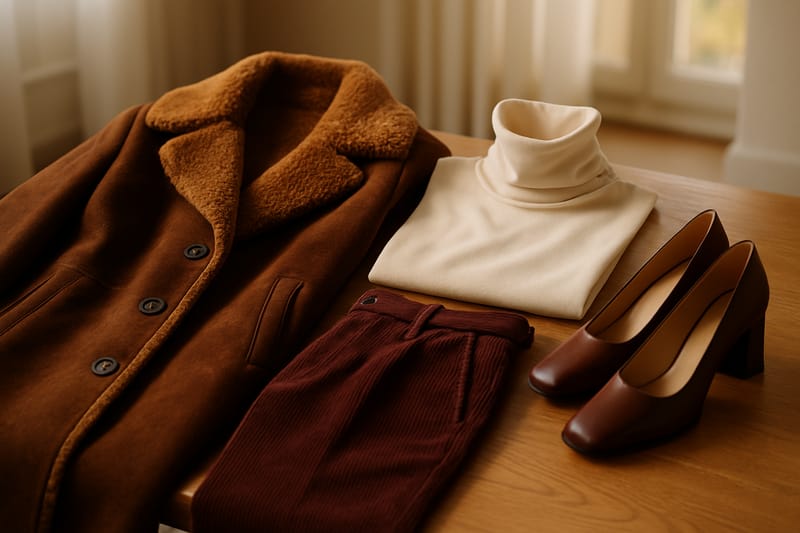
AW 2026 Wardrobe: The Key Pieces Stylists Are Reaching For
Ten specific AW 2026 key pieces — from shearling coats to corduroy trousers — with three price tiers and styling notes from top stylists.
Mood Dressing: How to Use Clothes to Shape the Way You Feel
Mood dressing uses enclothed cognition to match outfits to emotional states. Learn four science-backed wardrobe strategies for focus, confidence, and calm.