
Mood Dressing: How to Use Clothes to Shape the Way You Feel
Mood dressing uses enclothed cognition to match outfits to emotional states. Learn four science-backed wardrobe strategies for focus, confidence, and calm.
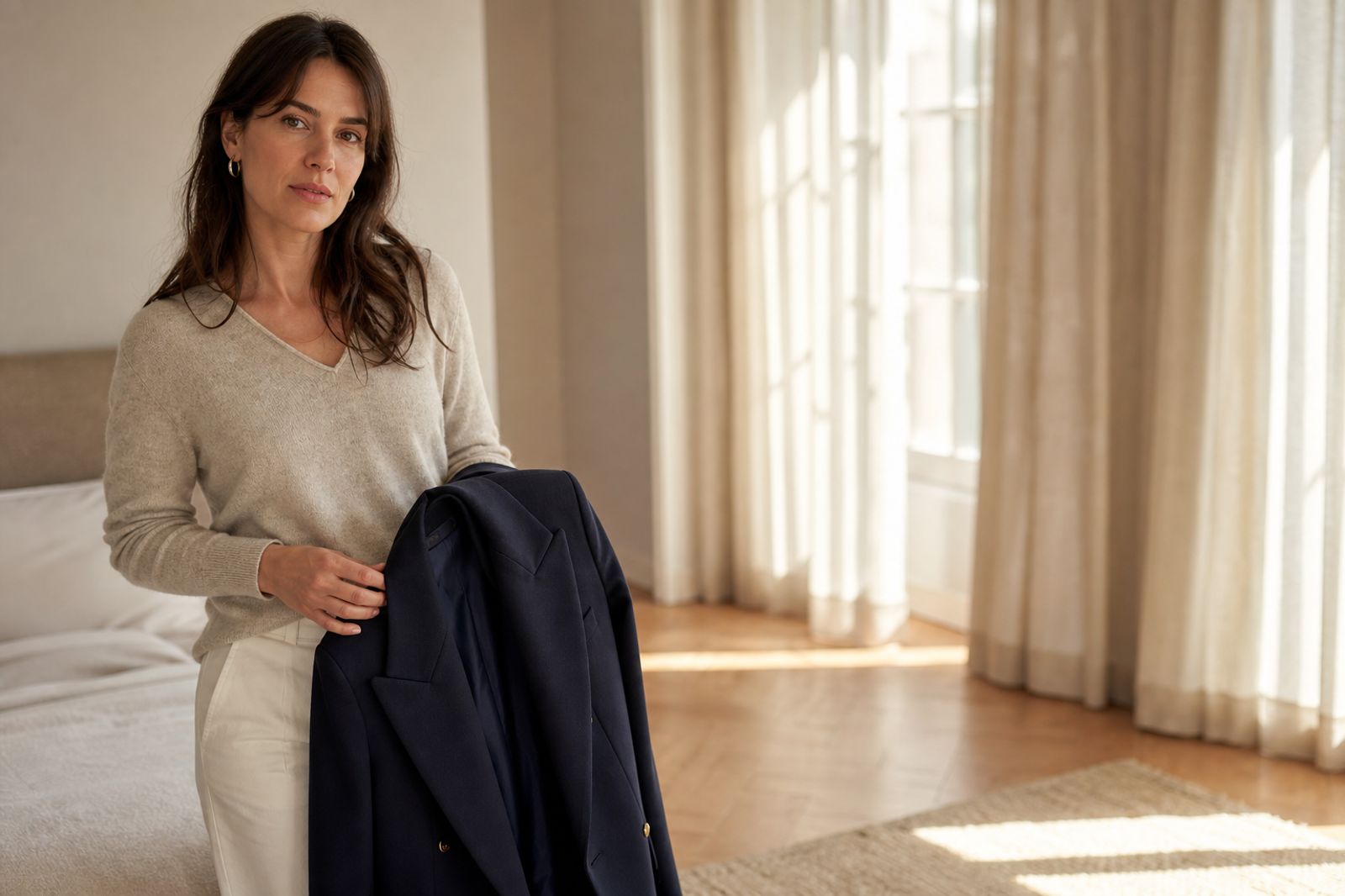

Mood dressing — the deliberate practice of choosing clothes to influence how you feel — sits at the intersection of fashion psychology and daily ritual. A 2026 survey shows that 96% of people report a shift in emotional state when they change how they dress, and specific garments can measurably improve focus, confidence, and calm. This guide maps four mood states to concrete wardrobe strategies grounded in science, not guesswork.

How Clothes Affect Your Mood: The Science of Enclothed Cognition
Clothes affect mood through a mechanism researchers call enclothed cognition — the systematic influence that garments have on the wearer's psychological processes. In a landmark 2012 study, participants wearing a doctor's lab coat made 50% fewer errors (in the 2012 study) on cognitive tasks than those in street clothes. When the same coat was labelled an artist's smock, the performance boost vanished entirely. The garment itself was identical; only the meaning changed.
The finding reframes how clothes affect your mood. Dressing well is not about fabric touching skin — it is about the story you tell yourself while wearing it. A tailored blazer does not inherently produce confidence. But if you associate sharp tailoring with competence and authority, putting one on activates that mental framework before you leave the house.
The practical implication: mood dressing works best when you build personal associations deliberately, not when you follow generic colour-psychology charts. Your wardrobe is a meaning system, and you are its author.

Dopamine Dressing: Beyond the Bright-Colours Myth
Dopamine dressing — wearing vivid colours to boost mood — draws 3,600 monthly US searches as of 2026, making it the most visible entry point into fashion psychology.
Colour does influence emotional states, but the effect is culturally contingent. Research shows blue and green tend to evoke calm and positive feelings, likely because they appear frequently in natural environments. Red and black carry more negative associations in Western contexts, yet red symbolises luck and celebration across much of East Asia. The most consistent finding: lighter colours register as more joyful than darker ones, regardless of hue.
The deeper practice — what fashion psychologist Shakaila Forbes-Bell calls "Wearapy" — is not about forcing brightness onto a grey mood. It involves two distinct strategies: honouring your current emotional state through clothing that matches how you feel, or intentionally wearing something that pulls you toward a different state. Both are valid. The error is treating one approach as universal.
Dressing for Confidence: What Actually Works?
Dressing for confidence tops the list of intentional outfit motivations, cited by 40% of respondents in a 2025 global survey. But confidence dressing is not a single formula — it depends on context, body awareness, and personal symbolism.
Three evidence-backed principles consistently appear across fashion psychology research:
- Structure signals authority. Fitted silhouettes and tailored lines activate self-perceptions of competence. This does not mean formal — a well-cut denim jacket can carry the same psychological weight as a blazer if you associate it with capability.
- Tactile fabrics heighten presence. Materials with distinct texture — leather, silk, heavy cotton — draw attention to the body and anchor you in the physical moment. This grounding effect counteracts the dissociation that often accompanies low confidence.
- Intentional contrast commands attention. A deliberate colour contrast (a white shirt against dark trousers, a single red accessory in a neutral outfit) functions as a visual declaration of agency. You made a choice. That choice reinforces self-trust.
Women report a stronger emotional connection to clothing than men, and are more likely to match outfits to emotional states — particularly when seeking feelings of confidence, happiness, and empowerment. Dressing for how you want to feel is not vanity; it is a legitimate self-regulation strategy that happens to involve getting dressed.

The Psychology of Getting Dressed: Four Mood-State Profiles
The psychology of getting dressed becomes actionable when you move from abstract principles to specific outfit frameworks. Four mood-state profiles cover the most common emotional needs a wardrobe can address.
| Mood State | Colour Palette | Silhouette | Key Pieces | Psychological Effect |
|---|---|---|---|---|
| Focus | Neutrals — navy, grey, black, white | Structured, minimal | Tailored trousers, crisp shirt, clean-line knit | Reduces decision fatigue, signals task-readiness |
| Confidence | High contrast, intentional accent colour | Sharp, fitted | Blazer, leather piece, statement shoe | Activates self-perception of competence and authority |
| Creativity | Mixed patterns, unexpected combinations | Layered, fluid | Printed scarf, artisan knit, vintage piece | Signals permission to think without constraints |
| Rest | Muted, warm tones — oatmeal, sage, soft grey | Loose, enveloping | Cashmere knit, wide-leg linen, soft robe coat | Tells the nervous system it is safe to decompress |
Each profile works through the same mechanism: the garments carry meaning, and that meaning shifts your internal state. The focus profile minimises sensory distraction. The confidence profile maximises self-perception. The creativity profile lowers self-censorship. The rest profile activates parasympathetic signals.
Treat these as starting points, not prescriptions. The most effective mood-dressing practice builds on your own associations — if a particular vintage jacket makes you feel invincible because of the night you wore it to a pivotal event, that jacket is your confidence piece regardless of what any colour chart says.
Enclothed Cognition in Fashion: Why Meaning Matters More Than Material
Enclothed cognition in fashion explains why two identical garments can produce different psychological outcomes. The mechanism is not mystical — it is the same associative learning that governs all human cognition. When you repeatedly pair a garment with a particular mental state, the garment becomes a cue that activates that state automatically.
Stress explains why stressed women neglect up to 90% of their wardrobe, per 2025 retail analytics, defaulting to the same small rotation of "safe" clothes. Stress narrows cognitive bandwidth, which reduces outfit exploration, which reinforces the stress cycle. Breaking the pattern requires a deliberate override — and that is where a morning dressing ritual becomes powerful.
The three-question check-in takes thirty seconds and transforms getting dressed from autopilot into a mood-shaping practice:
First: How do I actually feel right now? Name the emotion without judgement.
Second: What do I need from today? Match the garment to the task, not the mood.
Third: What would my future self thank me for wearing? This bridges the gap between current feeling and desired outcome.
Sometimes the answer to question three is "dress for the person I want to become" — a concept fashion psychologist Dawnn Karen has formalised into her practice. Dressing aspirationally is not self-deception. It is a deliberate identity cue that can shift behaviour and self-perception throughout the day.

Frequently asked
What is the three-by-three rule in fashion?
The three-by-three rule is a capsule wardrobe framework: choose three tops, three bottoms, and three pairs of shoes, then mix and match them for a defined period. The constraint forces creative outfit combinations and reduces the decision fatigue that undermines mood dressing.
Is enclothed cognition real or just a trend?
Enclothed cognition is a peer-reviewed concept published in the Journal of Experimental Social Psychology. The original 2012 study by Adam and Galinsky demonstrated measurable cognitive performance changes based solely on garment meaning, with a 50% reduction in task errors.
How does clothing influence your mood on stressful days?
Clothing influences mood by activating associative memories and identity cues. On stressful days, structured garments in familiar combinations provide a sense of control and competence, while soft textures and loose fits can down-regulate the nervous system.
What colour makes you look approachable?
Warm tones — soft camel, blush, warm white — consistently read as more approachable than cool or dark tones. Light colours register as more positive across cultures, and muted warm hues avoid the intensity of bright colours while still signalling openness.
Can what you wear affect your mental health?
Clothing choices can support mental health by functioning as a low-effort self-regulation tool. Building a wardrobe with intentional mood-state options gives you a daily practice that reinforces agency and self-awareness — two factors consistently linked to psychological resilience.
2026 Fashion Guide for Women: How to Dress for the Moment
A 2026 fashion guide for women — the silhouettes, capsule pieces, and quiet luxury moves that define the year's most wearable looks.

Personal Style Identity: Why It Beats Every Trend in 2026
Personal style identity outlasts fast fashion's 52 micro-trends. Define your aesthetic, shop intentionally, and dress with confidence in 2026.
Capsule Wardrobe 2026: The Complete Guide to Building Yours
Build a capsule wardrobe in 2026 with the 3-3-3 rule, seasonal essentials, and trend tips. Fewer pieces, better style, less waste.