
Quiet Luxury: The Definitive Guide to Understated Elegance
Discover what quiet luxury means — the style philosophy built on quality materials, understated design, and investment pieces that last decades.
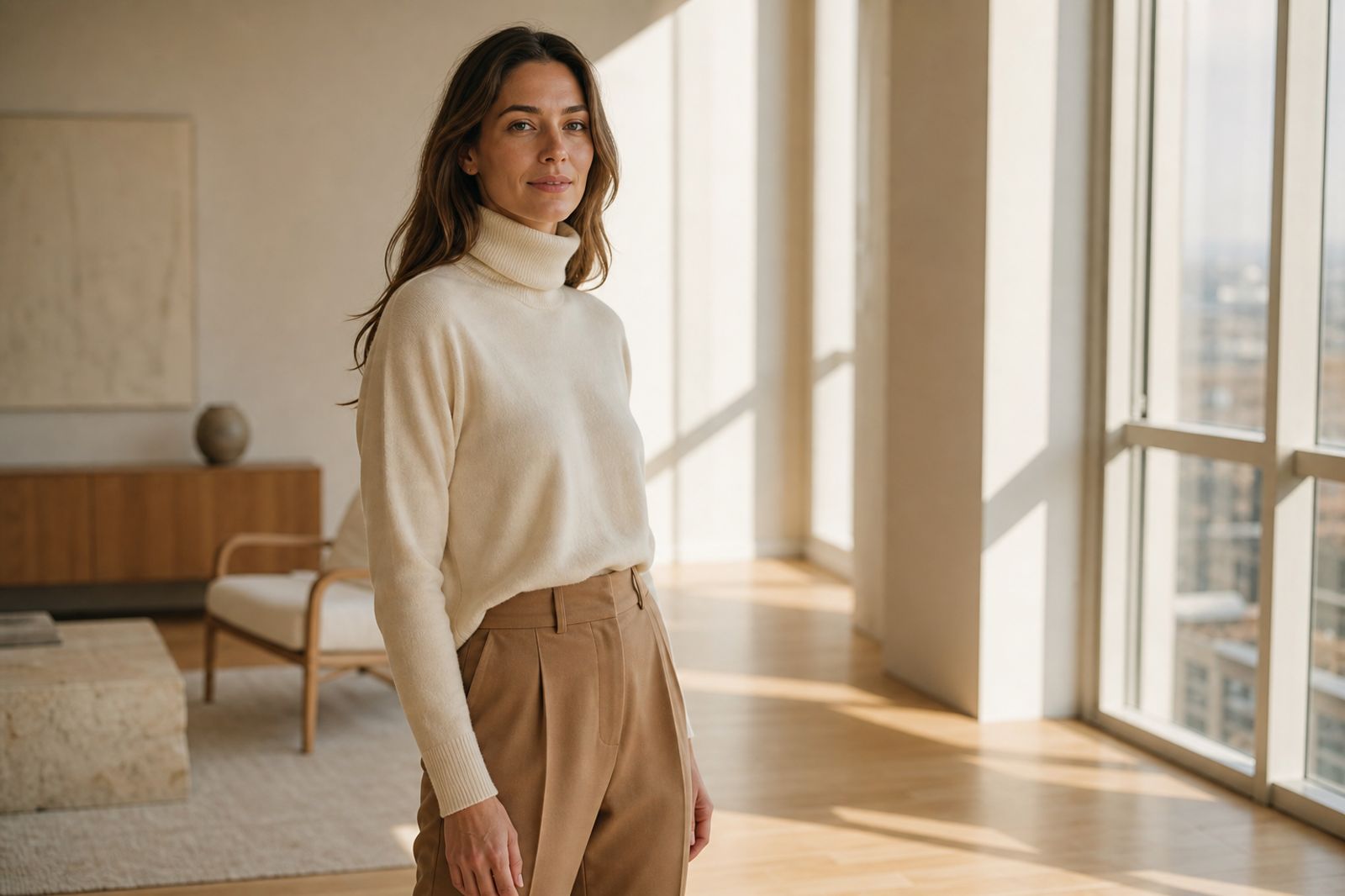

Quiet luxury is a style philosophy built on impeccable materials, restrained design, and the discipline to let craftsmanship speak louder than any logo. For those asking "what is quiet luxury," the answer lives in the details — natural fabrics, muted palettes, and construction quality that reveals itself through years of wear. The movement draws 6,600 monthly searches in 2026 and has expanded from fashion into interiors and lifestyle, rewarding investment over impulse and longevity over novelty. Use the table of contents to navigate this guide through quiet luxury's meaning, its defining style codes, the brands that do it best, and how the aesthetic is evolving in 2026.

Quiet Luxury Meaning: A Philosophy, Not a Price Tag
Quiet luxury means investing in understated elegance, refined consumption, and discerning taste without overt displays of wealth. The concept rejects visible branding in favor of natural fabrics — cashmere, silk, fine wool, and linen — paired with impeccable tailoring and muted color palettes. Unlike fast fashion's trend cycles, quiet luxury pieces are designed to last a decade or more, making the cost-per-wear equation far more favorable than seasonal purchases.
The movement gained mainstream visibility in 2023, but its roots trace to old European houses — Loro Piana's cashmere heritage spans six generations, while Brunello Cucinelli built an entire brand on what he calls "humanistic capitalism." What changed is accessibility: the internet made these references available to everyone, not just those who shopped in Milan or Paris.
What Defines Quiet Luxury Style?
What defines quiet luxury style comes down to five core principles that separate the look from generic minimalist fashion and basic dressing. Mastering these five principles transforms how you approach every purchase.
- Quality over quantity — A wardrobe of 30 exceptional pieces as of 2026 outperforms 100 mediocre ones as of 2026. Investment pieces range from $200 for a fine-gauge knit to $3,000 for a tailored coat as of 2026.
- Neutral palette as foundation — Camel, navy, cream, charcoal, and white form the backbone. These tones combine in dozens of ways as of 2026 without clashing.
- Fabric integrity first — Cashmere, silk, wool, linen, and fine cotton signal quality through touch and drape. Synthetic blends rarely pass the quiet luxury test.
- Fit is non-negotiable — A $200 blazer tailored to your measurements looks indistinguishable from a $2,000 piece as of 2026. Budget $50–100 for alterations as of 2026 on every structured garment.
- Accessories whisper, never shout — A structured leather tote, a slim gold watch, quality leather loafers with no visible branding — each piece earns its place through function and material, not label recognition.

Quiet Luxury Fashion: Key Brands and Price Tiers
Quiet luxury fashion brands span three distinct price tiers, each offering a different entry point into the philosophy without compromising its core values.
| Tier | Brands | Price Range | What You're Paying For |
|---|---|---|---|
| Investment | The Row, Loro Piana, Brunello Cucinelli, Celine | $800 – $5,000+ | Heritage craftsmanship, rare materials, made-in-Italy/France construction |
| Premium | Max Mara, Khaite, Veronica Beard | $400 – $2,500 | Strong design language, quality fabrics, excellent resale value |
| Accessible | Toteme, Jenni Kayne, La Ligne, Varley, Ralph Lauren Purple Label | $100 – $500 | Clean aesthetics, decent materials, strong capsule potential |
The Row — founded by Mary-Kate and Ashley Olsen — exemplifies the investment tier with its zero-logo approach and $2,000+ handbags as of 2026 that consistently resell at 70–80% of retail as of 2026 as of 2026. Max Mara's camel coats, starting around $2,000 as of 2026, have maintained cult status for decades. At the accessible end, Swedish brand Toteme offers clean Scandi aesthetics at $200–400 as of 2026, while Jenni Kayne's California-cool cashmere pieces start at $150 as of 2026.
Building a Quiet Luxury Wardrobe: A Capsule Approach
Building a quiet luxury wardrobe starts with seven foundational pieces that anchor dozens of outfits. The capsule wardrobe approach means spending $3,000–6,000 upfront as of 2026 on fewer, better items — compared to $1,500–2,500 annually on fast-fashion replacements as of 2026 that last 6–12 months.
The core capsule:
- A tailored blazer in camel or navy ($300–800 as of 2026)
- Two cashmere crewneck sweaters in neutral tones ($200–500 each as of 2026)
- Well-fitted straight-leg denim in a dark wash ($150–300 as of 2026)
- A structured leather tote or shoulder bag ($400–1,200 as of 2026)
- Quality leather loafers or ballet flats ($200–600 as of 2026)
- A wool or cashmere coat for fall and winter ($500–2,000 as of 2026)
- Silk blouses in white, cream, or pale blue ($150–400 as of 2026)
Each piece should combine with at least three others in the capsule. The blazer works over the cashmere knit with denim, or over the silk blouse with tailored trousers. The coat layers over everything. Multiply seven pieces across seasons and you have 30+ distinct outfits without repeating a combination in a work week.

Quiet Luxury Aesthetic: Visual Codes Across Platforms
The quiet luxury aesthetic has generated over 56,000 monthly Pinterest searches in 2026, establishing a recognizable visual language across Instagram and TikTok. The aesthetic is defined by tonal dressing, monochromatic layering, and a deliberate absence of visual noise.
Key visual codes:
- Tonal dressing — Head-to-toe in one color family with subtle shade variation (cream knit with ivory trousers and sand shoes)
- Undone tailoring — Blazers worn open, sleeves pushed to the forearm, nothing rigid or overly pressed
- Negative space — Simple backgrounds, natural light, minimal props in photography
- Texture over pattern — Bouclé, mohair, brushed wool, and raw linen replace prints and embellishments
- Quiet details — Hand-stitched buttonholes, covered seams, invisible zippers — quality that rewards close inspection
The aesthetic photographs best in soft, natural light: morning windows, golden hour, overcast days. Interior backdrops lean toward clean, uncluttered spaces — white walls, natural wood, linen curtains — reinforcing the philosophy's connection to intentional living.
Quiet Luxury in 2026: How the Movement Is Evolving
Quiet luxury 2026 trends show the movement absorbing new influences while maintaining its core commitment to quality and restraint. Rather than fading, the movement has matured — seven defining luxury trends this year align directly with quiet luxury's principles: tactile finishes, true-to-form silhouettes, mocha shades as new neutrals, and layering as a styling technique.
What's changed in 2026:
- Mocha and warm earth tones replace cool grays as the dominant neutral palette, adding warmth to the traditionally austere aesthetic
- Textural richness — Bouclé, mohair, and brushed wool add depth without visual noise, making quiet luxury interiors feel more inviting
- Lace in unexpected places — Delicate lacework appears on structured blazers, tailored trousers, and daywear accessories, pushing the fabric beyond its eveningwear associations
- True-to-form silhouettes — Body-skimming cuts that follow natural proportions replace the oversized shapes of previous years
- Cross-category expansion — Interior design identified quiet luxury as "the defining home trend of 2026," with natural materials and warm neutrals moving from wardrobes into living rooms
Pinterest data shows search interest climbing year over year, with 6,600 monthly queries for the core term in 2026 and growing demand for related searches like "quiet luxury brands" (4,400/month in 2026) and "quiet luxury bags" (2,400/month in 2026).
Quiet Luxury Interiors: The Philosophy Beyond Fashion
Quiet luxury interior design translates the fashion philosophy into living spaces using the same principles: natural materials, warm neutrals, and quality as the defining element. The approach has been identified as one of 2026's most significant home trends, extending quiet luxury from a fashion movement into a complete lifestyle framework.
Core interior elements:
- Natural materials — Wood, stone, linen, wool, and ceramic replace synthetic surfaces and mass-produced finishes
- Warm neutrals — Cream, sand, warm gray, and soft brown create cohesive, calming palettes
- Plush textiles — Cashmere throws, linen cushions, and wool rugs add tactile richness that mirrors the fashion approach
- Polished surfaces — Marble, brass, and wood with visible grain provide subtle luxury signals
- Quality as decoration — Exceptional craftsmanship in furniture and objects replaces branded or decorative accessories
Many quiet luxury fashion brands now operate across both categories. Jenni Kayne sells home goods alongside clothing, while The Row's minimalist aesthetic translates directly to interior design principles. Interior designers report that clients increasingly request "quiet luxury" by name, treating it as a unified philosophy rather than separate fashion and home categories. The rise of quiet luxury interiors reflects a broader cultural shift toward intentional consumption — homeowners are applying the same investment mindset to their living spaces that they bring to their wardrobes.

Quiet luxury is not a passing trend but a fundamental shift in how thoughtful consumers approach quality and consumption. Whether applied to a cashmere sweater, a marble countertop, or a wool rug, the principles remain consistent: invest in materials, respect craftsmanship, and trust that restraint reads as confidence. As fast fashion faces increasing scrutiny from consumers and regulators alike, and as the market for intentional purchases continues to grow, quiet luxury's emphasis on fewer, better things positions it as a signature style philosophy for the decade ahead.
Read next in this series
Spoke posts in this cluster are being published soon — check back for related reads.
Frequently asked
What does quiet luxury mean?
Quiet luxury is a style philosophy that prioritizes high-quality materials, impeccable craftsmanship, and understated design over visible logos and trend-driven purchases. The approach values investment pieces that last decades rather than seasonal wardrobe turnover.
What brands represent quiet luxury?
The Row, Loro Piana, Brunello Cucinelli, Celine, and Max Mara represent investment-tier quiet luxury. More accessible options include Toteme, Jenni Kayne, La Ligne, and Varley — all offering similar restraint and quality at $100–500 price points.
Is quiet luxury still relevant in 2026?
Quiet luxury continues growing in 2026 with 6,600 monthly search queries and expansion into interior design and lifestyle categories. The movement has evolved to include textural richness, warm earth tones, and lace accents while maintaining its core principles.
What are the signs of a quiet luxury piece?
Quiet luxury garments feature natural fabrics (cashmere, silk, wool), neutral color palettes, clean silhouettes, and invisible construction quality. The absence of visible logos, flashy hardware, and trendy details is the most reliable indicator.
What is the concept behind quiet luxury?
Quiet luxury’s concept holds that true quality needs no advertisement. Rather than signaling status through visible branding, practitioners invest in pieces where the luxury lives in the fabric, fit, and finish — details that reveal themselves through experience, not display.

Capsule Wardrobe for Women: The 2026 Checklist
Build your 2026 capsule wardrobe: a checklist with the 5-4-3-2-1 method, travel essentials, and seasonal picks for women who buy fewer, better things.
Capsule Wardrobe Essentials: The Definitive Guide
Build a capsule wardrobe for every season and budget. Our guide covers checklists, travel systems, and expert frameworks for intentional style.
The Complete Guide to Sustainable Fashion
Learn what sustainable fashion really means — from materials and certifications to building a wardrobe that lasts. A practical, research-backed guide.