
Minimalist Makeup: The Complete Guide to Intentional Beauty
Build a capsule makeup collection of 7 multitasking products. Learn the minimalist makeup routine that saves time, money, and waste.
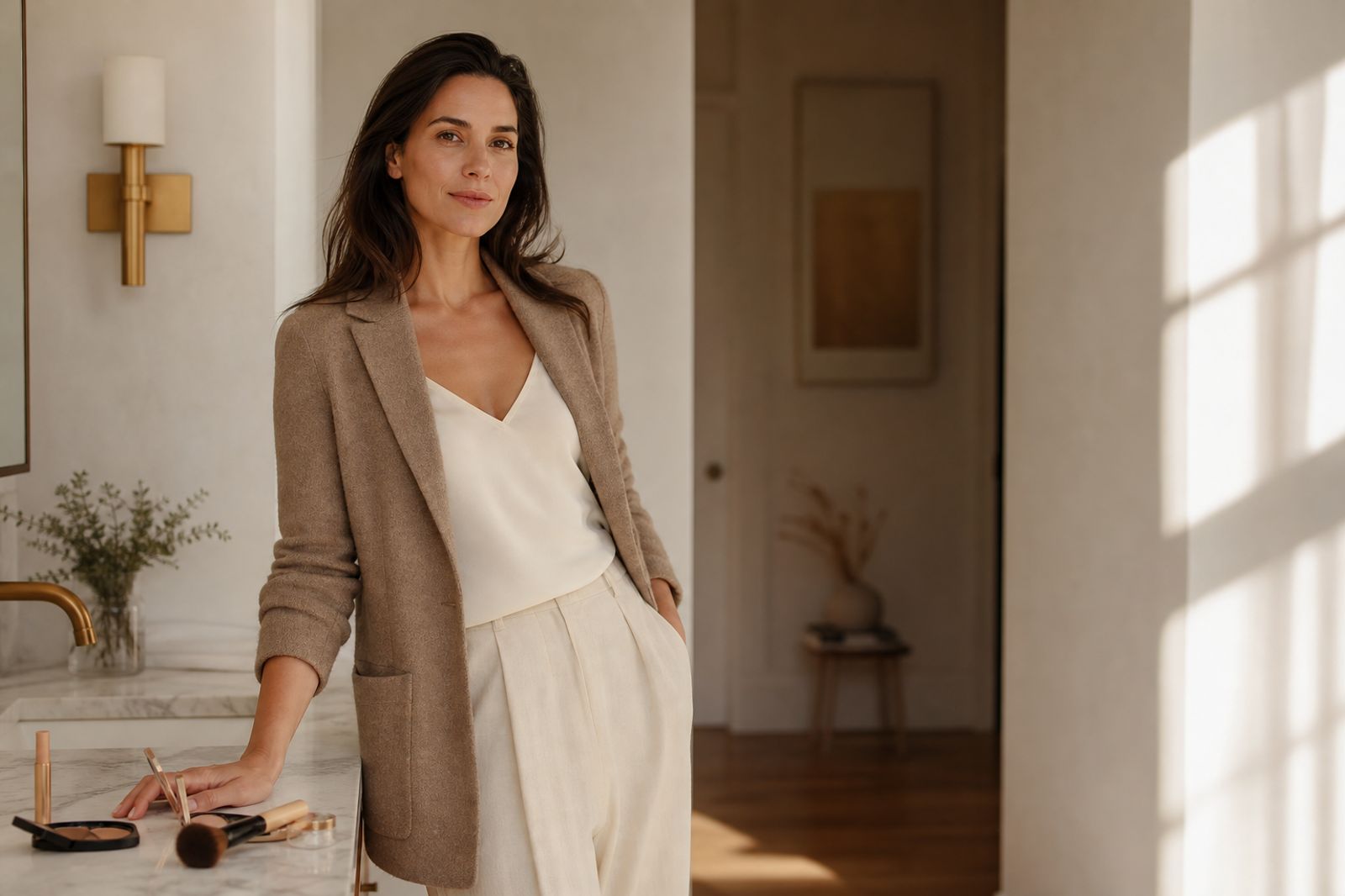

Minimalist makeup strips your beauty routine to the essentials — products that pull double or triple duty, a streamlined bag, and a philosophy of less-but-better that takes under ten minutes to apply. The movement has redefined how a generation approaches beauty: intentional curation over impulse accumulation. Use the table of contents to navigate the guide below, from building your first capsule to the clean-beauty brands worth the investment.
What Minimalist Makeup Really Means
Minimalist makeup is intentional curation — not deprivation. Women own an average of 40 makeup products (as of 2026) but reach for only five on any given day, meaning roughly 87% of most collections (per 2026 industry data) sits untouched (as of 2026) in a drawer.
Weekly makeup usage dropped 28% after the pandemic (as of 2025), accelerated by remote work and a growing preference for bare-skin finishes. The shift is measurable: the clean beauty market was worth $10.49 billion in 2025 (as of 2026) and is on track to reach $35.30 billion by 2033 (as of 2026) at a 16.8% compound annual growth rate (as of 2026).
The minimal makeup look sits at the centre of this — fewer products chosen with more care, each one doing the work of two or three conventional equivalents. A minimalist beauty routine starts with mindset: edit first, buy second.

The 7-Product Capsule Makeup Collection
Capsule makeup distils your entire routine into seven items that cover every occasion from a Tuesday morning to a Saturday night out. Here is the framework professional makeup artists and beauty editors consistently recommend:
- Tinted moisturiser or skin tint — replaces foundation + primer; look for SPF 30+ with buildable coverage.
- Cream concealer — replaces heavy foundation for blemishes; look for hydrating, medium coverage.
- Multi-use lip and cheek colour — replaces blush + lipstick + eyeshadow; look for cream or balm texture.
- Brow gel or pencil — replaces eyebrow kits and pomades; tinted gel for quick grooming.
- Mascara — replaces eyeliner and lash curler for some; tubing or lash-conditioning formula.
- Pressed or loose powder — replaces setting spray + mattifier; talc-free, finely milled.
- Bronzer or contour stick — replaces contouring palettes; cream stick for blendability.
Multi-use makeup products — a single lip-and-cheek tint, a cream stick that works as blush, shadow, and lip colour — form the backbone of the collection. Brands like Merit, Saie, and ILIA were built around exactly this idea: each SKU designed to multitask.
A capsule of this size eliminates 15–20 redundant products (as of 2026) while keeping the range from natural daytime to polished evening. The seven-item framework covers skin, eyes, brows, lips, and cheeks with no gaps and no overlaps.

How to Audit Your Makeup Bag Today
A makeup bag audit takes 20 minutes (as of 2026) and reveals exactly what you use versus what you hoard. Start by placing every product you own on a clean surface and sorting into three piles: daily use, occasional use, and untouched in three months.
The One-Month Test: Move everything except your seven capsule picks into a box. Seal it, date it, and store it out of reach. After 30 days (as of 2026), note which items you actually pulled back out. Anything still sealed earns a clear-out — donate, recycle, or bin.
Check expiry dates. Mascara expires in three to six months. Liquid foundation and concealers last 12 months. Powder products stretch to 24 months. Using expired products risks eye infections and breakouts — ingredients oxidise and bacteria colonise the packaging.
Refillable palettes cut waste by letting you swap single pans instead of discarding entire compacts. Dual-ended brushes replace 10 single-purpose tools with two or three that clean faster and store flatter.
- Keep: Foundation matched to current skin tone; powder products under 2 years old.
- Toss: Mascara opened more than 3 months ago; lip products with changed smell or texture; any product used fewer than 5 times this year.

Which Clean Beauty Brands Actually Perform?
Clean beauty brands have closed the gap between "natural" and high-performance. Sixty-eight percent of consumers now actively seek clean ingredients, and paraben-free formulations are growing 80% faster (as of 2026) than the overall beauty market.
Brands that anchor the minimalist makeup space include:
- Merit — The quintessential edit: seven core products, each designed to work together. The Flush Balm, Day Glow highlighter, and lip oils all pull double duty across cheeks, lips, and eyes.
- ILIA — Super Serum Skin Tint replaces foundation, sunscreen, and serum in a single step. The brand's entire line follows the minimalist makeup philosophy.
- Saie — Dewy, buildable formulas built for layering. The Glowy Super Gel works as primer, highlighter, and mixer.
- Jones Road — Bobbi Brown's comeback brand. What The Foundation delivers sheer, skin-like coverage without settling into fine lines.
- RMS Beauty — Organic cream formulas on a raw coconut oil base. The Living Luminizer is a multitasking standout for lit-from-within glow.
Each of these labels designs with the minimalist buyer in mind: fewer SKUs, thoughtful packaging, refill options, and clean ingredient lists that pass scrutiny from dermatologists and environmental watchdogs alike. Sephora now stocks more than 80 verified clean beauty brands (as of 2026) — the category is mainstream, not niche.
Building a Minimalist Makeup Routine in 10 Minutes
A minimalist makeup routine takes eight to ten minutes with the right products within arm's reach. Here is the sequence that keeps things fast without sacrificing a polished finish:
- Prep the skin — moisturiser and SPF. If your tinted base already contains SPF 30+, you can skip the separate sunscreen step.
- Apply tinted base — blend with fingertips or a damp sponge. Start at the centre of the face and push outward for the most natural skin tint finish.
- Spot conceal — dab on dark circles and blemishes only. Pat, don't rub — blending too aggressively sheers the coverage to nothing.
- Set with powder — a light sweep across the T-zone keeps shine in check without flattening the dewy finish.
- Cheeks and lips — one multitasking cream product. Apply to the apples of the cheeks and blend upward; tap the same product onto lips.
- Brows — a tinted gel through the brows frames the entire face in seconds.
- Mascara — one coat of tubing mascara for clean, clump-free definition.
Total (as of 2026): ten minutes, seven products, no brushes required — though a dual-ended brush for powder and blush speeds things up for those who prefer tool application. This is a minimalist makeup routine that works for school runs, office days, and dinner reservations alike.

Skinimalism and the Sustainability Connection
Skinimalism calls for investing in fewer, better-performing products instead of accumulating dozens of mediocre ones. Weekly makeup usage fell 28% post-pandemic, but spending per product increased — consumers are buying less but choosing more deliberately.
The average minimalist buyer now spends 20–30% more per item (as of 2026) but uses 60% fewer products overall, according to industry tracking data. Powder compacts in refillable aluminium cases generate 70% less waste than disposable plastic palettes (as of 2026). Cream products in glass jars last longer than pump-bottle foundations that trap product at the bottom.
The simple math of a seven-product capsule versus a 30-product drawer (as of 2026) means fewer units purchased, fewer units discarded, and a smaller environmental footprint per year. Across a five-year period, a minimalist approach saves an estimated $600 to $1,200 (as of 2026) in redundant purchases alone. Brands like ILIA, Merit, and RMS have introduced refill programs — refill pans or cartridges that extend each product's life and cut packaging waste at the source.
Minimalist Makeup Mistakes to Avoid
Buying "minimalist" products without decluttering first. Adding a curated set to an unedited collection creates more clutter, not less. The audit comes before the shopping.
Confusing minimalism with bare skin. Minimalist makeup still covers, defines, and enhances — it just does so with fewer, smarter tools. A full seven-product capsule can create looks ranging from invisible to evening-glam.
Ignoring skin undertone. One tinted base needs to match your skin precisely. Test at the jawline in natural light, not under store fluorescents — fluorescent lighting skews warm by 15–20% (as of 2026).
Skipping SPF because your base contains it. Most people apply too little tinted moisturiser (as of 2026) to reach the labelled SPF protection. A separate SPF layer is still best practice for extended sun exposure.
Over-capsuling. Fewer than five products can leave gaps for anyone who wants visible brow definition or evening-ready lips. The seven-product framework exists because it covers the full range without redundancy.
Frequently asked
What is minimalistic makeup?
Minimalist make up — sometimes written as one word, "minimalist makeup" — is a curated approach to beauty that uses fewer, multifunctional products to create polished looks. The philosophy prioritises quality and versatility over quantity — typically seven core items that cover every occasion from bare-skin natural to polished evening.
What do you need for minimalist makeup?
A seven-product capsule: tinted moisturiser, concealer, multi-use lip-and-cheek colour, brow gel, mascara, setting powder, and a bronzer or contour stick. Each item replaces two or three conventional products, cutting total collection size by 70% or more.
How do you create a minimalist makeup routine?
Start with a one-month audit — box everything except your chosen capsule. Apply in a fixed sequence: tinted base, spot conceal, powder, cheeks and lips, brows, mascara. The entire minimalist makeup routine takes under ten minutes once the muscle memory is set.
What is the capsule makeup collection concept?
Borrowed from capsule wardrobes, the capsule makeup collection applies the same logic: a small, intentional set of products that cover all needs without overlap. The seven-product framework is the most common starting point, adjusted up or down based on personal preference.
What are the best clean beauty brands for minimalists?
Merit, ILIA, Saie, Jones Road, and RMS Beauty are consistently recommended. Each brand was built around multitasking products, clean formulations, and minimalist packaging — designed from the ground up for buyers who want fewer, better beauty essentials.
10 Luxury Skincare Brands Worth Knowing in 2026
Discover 10 luxury skincare brands redefining regenerative science in 2026 — from Augustinus Bader to Tata Harper. Clinical results, real ingredients.
Capsule Wardrobe 2026: The Complete Guide to Building Yours
Build a capsule wardrobe in 2026 with the 3-3-3 rule, seasonal essentials, and trend tips. Fewer pieces, better style, less waste.
The Complete Skincare Routine: A Step-by-Step Guide
Build an effective skincare routine with this guide. Covers morning and night sequences, product picks by skin type, and mistakes to avoid.