
Womens Fashion Guide: Building a Timeless Wardrobe
A complete womens fashion guide covering 7 essential pieces, sustainable style, and capsule wardrobe strategies for a closet that lasts.
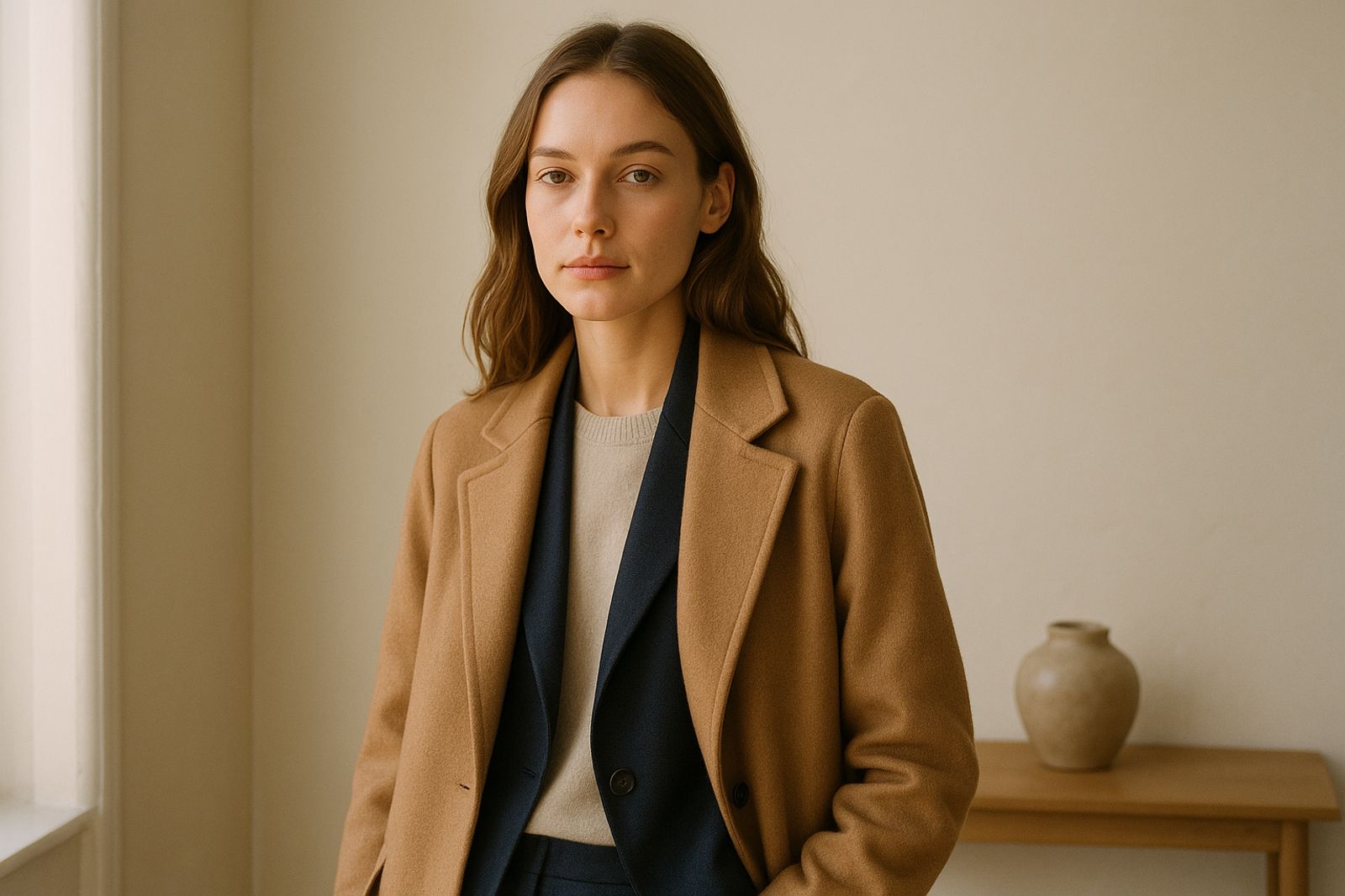

Building a timeless wardrobe is less about accumulating clothes and more about editing ruthlessly. Womens fashion today sits at an inflection point: the global capsule wardrobe market is valued at $4.13 billion in 2026 and is projected to reach $11.42 billion by 2035, signaling a clear shift away from disposable trend cycles toward intentional dressing. This guide distills that movement into a working framework — the pieces, proportions, and principles that hold their shape across seasons and decades.
What Defines Timeless Womens Fashion
Timeless womens fashion rests on silhouettes and materials that have remained visually coherent for decades. A well-cut trench coat, a pair of straight-leg trousers in wool gabardine, a cashmere crewneck — these pieces do not belong to a single era. They share three traits: clean lines, natural fibers, and proportions that neither cling nor overwhelm the body.
The distinction between timeless and trendy is structural, not aesthetic. Trends operate on a 6-to-18-month cycle; they are designed to feel dated. Timelessness, by contrast, is a property of construction and proportion. A navy blazer with notch lapels and a single-button closure looked right in 1985, looks right now, and will look right in 2045. The lapel width may shift by a centimeter, but the garment's visual logic stays intact.
Fabric choice does most of the heavy lifting. Wool, cashmere, silk, linen, and high-quality cotton drape differently than their synthetic counterparts — they hold shape, breathe, and age with character rather than disintegrating. A wool-cashmere blend blazer develops a soft hand over years of wear; a polyester version pills within months. Understanding fiber composition is the single most practical skill in building a wardrobe that lasts.
The 11 principles of timeless style — which include investing in fit over brand, choosing neutral foundations, and building around silhouette rather than color trends — all converge on one insight: the most versatile wardrobe is the one with the fewest compromises. Every piece earns its place by working with at least three other pieces already in the closet.

The Seven Essential Pieces Every Woman Needs
A functional wardrobe is not a uniform — it is a set of interchangeable parts that multiply in combination. These seven pieces form the structural core, covering roughly 80% of real-world dressing scenarios across work, weekends, travel, and social occasions.
1. The Tailored Blazer. Single-breasted, in navy or charcoal. Works over a t-shirt for weekend errands, over a silk camisole for dinner, over a button-down for work. The blazer is the single highest-leverage piece in a womens fashion wardrobe — it imposes structure on everything it touches and reads as intentional even when the rest of the outfit is casual.
2. Straight-Leg Trousers. High-waisted, in wool or a wool-blend. The straight leg is the most enduring trouser silhouette — it elongates without the severity of a wide leg or the trend-sensitivity of a skinny cut. A pair in charcoal or navy bridges office and off-duty without friction.
3. The White Button-Down. Crisp cotton poplin, slightly oversized. Layer it under a sweater, tuck it into trousers, or wear it open over a tank. The white shirt is a chameleon that has been in continuous rotation since the 1920s, when Coco Chanel first borrowed it from menswear.
4. A Cashmere Crewneck. Neutral tone — oatmeal, heather grey, or navy. Cashmere regulates temperature, feels luxurious against skin, and lasts years when stored properly with cedar and moth protection. A quality cashmere knit costs between $150 and $350 but delivers a cost-per-wear that undercuts fast-fashion sweaters within the first season.
5. The Trench Coat. Double-breasted, belted, in classic khaki or stone. The trench coat has been in continuous production since the 1890s. Its longevity is not accidental; the design solves a real problem — weather protection without bulk — with an elegance that newer silhouettes have not improved upon.
6. A Well-Fitted Jean. Dark wash, mid-rise, straight or slim-straight. Denim is the one casual fabric that has fully infiltrated every dress code. A clean dark pair reads polished enough for creative offices and relaxed enough for weekends. Look for 98% cotton, 2% elastane — enough stretch for comfort without the sagging that high-stretch blends produce after a few hours of wear.
7. The Little Black Dress. Simple construction, knee-length or midi, in a fabric with some weight — crepe, heavy jersey, or matte silk. The LBD is less a "rule" than a recognition that a single dark dress eliminates dozens of "what do I wear" decisions across formal and semi-formal settings.
| Piece | Best Fabric | Pairs With | Cost-Per-Wear Target |
|---|---|---|---|
| Tailored Blazer | Wool or wool-cashmere | Trousers, jeans, dresses | Under $3 |
| Straight-Leg Trousers | Wool gabardine | Blazer, cashmere knit, button-down | Under $2 |
| White Button-Down | Cotton poplin | Everything | Under $1.50 |
| Cashmere Crewneck | Two-ply cashmere minimum | Trousers, jeans, over dresses | Under $2 |
| Trench Coat | Cotton gabardine | All outfits as outerwear | Under $1.50 |
| Dark Jean | 98% cotton, 2% elastane | Blazer, cashmere, button-down | Under $1 |
| Little Black Dress | Crepe or heavy jersey | Blazer, trench, standalone | Under $3 |
Seven pieces generate at least 21 distinct outfits when combined thoughtfully. That math is the engine behind the capsule wardrobe concept, and it is why the approach scales without feeling repetitive. Add a scarf, a leather belt, or a statement earring and the combinations multiply further.

How to Dress Well as a Woman: Proportion and Personal Style
Dressing well is a spatial skill, not a shopping skill. The most common mistake is buying individual pieces that look good on a hanger but fight each other when worn together. The fix is proportion management — understanding how volume, length, and fit interact on the body.
The core principle: balance volume on one half of the body with structure on the other. A wide-leg trouser pairs best with a fitted top. An oversized sweater works with slim or straight-leg bottoms. This is not a rigid rule but a visual grammar — it creates a silhouette the eye can read quickly, which is what people mean when they say someone "looks put together."
Personal style develops through iteration, not inspiration boards. The fastest path is to identify three adjectives that describe how you want to feel in your clothes — not how you want to look, but how you want to feel. "Grounded, effortless, precise" produces a very different wardrobe than "romantic, bold, fluid." Both are valid; neither is achievable by copying someone else's closet.
Enclothed cognition — the documented psychological effect of clothing on the wearer's cognitive processes — adds a practical dimension. What you wear changes how you think and perform. A structured blazer genuinely makes people feel more authoritative; soft knits genuinely promote a sense of calm. Dressing well is not vanity. It is environmental design for the self, and the science behind it is robust enough to take seriously.
A useful exercise: photograph yourself in three outfits you reach for most often. Look for patterns — a preferred color palette, a recurring silhouette, a consistent level of formality. Those patterns are the skeleton of your personal style, and building around them is far more productive than chasing someone else's aesthetic.

Sustainable Fashion and the Capsule Wardrobe Movement
The fashion industry accounts for roughly 10% of global carbon emissions — more than international flights and maritime shipping combined. That number is not abstract for anyone building a wardrobe with intention. Every garment purchased is an environmental claim, and the math on fast fashion does not survive scrutiny.
Americans spend between $1,700 and $2,000 per year on clothing, yet the average piece is worn only 7 times before being discarded. A capsule wardrobe built from quality materials lasts 3 to 5 years or more, which means the per-wear cost drops dramatically even when individual price tags are higher. The women's apparel average spending figure from the Bureau of Labor Statistics sits at $655 per year — a number that looks modest until you account for the replacement cycle of cheap garments that lose shape, pill, or fall apart after a handful of washes.
The UK sustainable fashion market illustrates the scale of the shift: valued at $322.6 million in 2025, it is projected to reach $2,209.8 million by 2034, a compound annual growth rate of 22.64%. This is not a niche movement. It is a structural realignment of consumer behavior that is reshaping how brands source, produce, and price their collections.
A practical starting point: audit what you already own. Pull everything out of your closet. Separate into three piles — worn in the last month, worn in the last year, and unworn. The unworn pile is data. It tells you what you buy but do not reach for, which is the most expensive pattern in any wardrobe. For most people, 20% of their clothes account for 80% of their wear — the goal is to shrink the total inventory while keeping that ratio intact.
Building Your Wardrobe on Any Budget
The capsule wardrobe market's growth to $4.13 billion in 2026 reflects a democratization of the approach. Building a timeless wardrobe does not require luxury price points — it requires prioritization and a willingness to think in terms of cost-per-wear rather than sticker price.
Start with cost-per-wear math. A $300 blazer worn 150 times over three years costs $2 per wear. A $40 blazer worn 8 times before it pills and gets donated costs $5 per wear. The expensive garment is cheaper by every meaningful measure. This math holds across every category and is the single most useful framework for evaluating any purchase.
Invest first in what touches the skin. Underwear, base layers, and knits are where fabric quality is most perceptible and where cheap materials cause the most discomfort. Spend here before spending on outerwear or accessories.
Buy secondhand for experimentation. Vintage shops, consignment stores, and resale platforms are the lowest-risk way to test silhouettes and fabrics before committing to full-price versions. A $25 vintage wool blazer is a fitting room for a $400 investment later. The resale market has grown to over $200 billion globally, making quality secondhand pieces more accessible than ever.
One in, one out. The simplest guardrail against closet bloat. For every new piece, one existing piece leaves — donated, consigned, or recycled. This constraint forces evaluation and keeps the wardrobe lean over time.

Spring 2026 Trends Worth Your Attention
Timelessness does not mean ignoring the present. The spring 2026 runways offered several trends that align with — rather than contradict — a lasting wardrobe. The key is filtering trends through the lens of longevity: will this piece still look right in five years?
Statement tailoring dominated the spring 2026 collections — exaggerated shoulders on otherwise classic blazers, wider trouser legs in structured fabrics, and a return to suiting as everyday wear rather than office-only attire. These are iterations on existing wardrobe foundations, not departures from them. A slightly wider lapel or a stronger shoulder line updates a blazer without making it trend-dependent.
The elevated basics movement — the shift toward premium materials in simple silhouettes — continues to accelerate. Brands that once competed on price are now competing on fabric quality and construction. This is the market catching up to what intentional dressers have known for decades: a $90 t-shirt in long-staple Pima cotton outlasts and outperforms five $15 fast-fashion versions.
Color trends for 2026 lean warm — butter yellow, terracotta, warm ivory — which pair naturally with the neutral foundations of a capsule wardrobe. Adding one trend-color piece per season, if it works with at least three existing items, is a sustainable way to keep the closet feeling current without rebuilding it.
Making It Your Own: Beyond the Rules
Every framework, including this one, is a starting point — not a prescription. The womens fashion landscape is too rich and too personal for universal rules. What this guide offers is structure: a set of pieces and principles that have proven their staying power across decades of shifting trends and cultural contexts.
The final principle is the most important: buy less, choose well, and let the wardrobe earn its place over time. A closet full of clothes you actually wear — that fits, that feels right, that holds up — is not a luxury. It is a baseline that anyone can reach with deliberate choices and a willingness to say no to the next impulse buy.
The best-dressed women are not the ones with the most clothes. They are the ones who have edited down to what matters — and kept editing.
Expert Perspectives
"The most sustainable garment is the one you already own. Before buying anything new, ask yourself: will I wear this at least 30 times? If the answer is no, put it back." — Orsola de Castro, co-founder of Fashion Revolution and author of Loved Clothes Last
"Elegance is not about standing out, it's about being remembered. A woman in a perfectly fitted navy blazer and dark denim will always leave a stronger impression than someone in head-to-toe runway." — Amanda Harlech, creative consultant and longtime collaborator with Chanel and Dior
"The economics of fast fashion are an illusion. A $15 t-shirt that lasts five washes costs $3 per wear. A $90 t-shirt in long-staple cotton that lasts 200 washes costs $0.45 per wear. The expensive garment is the affordable one." — Elizabeth L. Cline, journalist and author of The Conscious Closet
Sources
- McKinsey & Company, The State of Fashion 2026 — mckinsey.com/industries/retail/our-insights/state-of-fashion
- United Nations Environment Programme, Sustainability and Circularity in the Textile Value Chain — unep.org/resources/report/sustainability-and-circularity-textile-value-chain
- ThredUp, Resale Report 2025 — thredup.com/resale
Frequently asked
What should a woman have in a capsule wardrobe?
A womens capsule wardrobe starts with 7 foundational pieces — tailored blazer, straight-leg trousers, white button-down, cashmere crewneck, trench coat, well-fitted jean, and little black dress — expanding to 25-35 items total that generate 30-plus outfits.
Is a capsule wardrobe cheaper than a regular wardrobe?
A capsule wardrobe costs more upfront but less over time. Over five years, capsule dressers spend 30 to 40% less than trend-driven shoppers while owning fewer, better garments with lower cost-per-wear.
What is the difference between timeless and classic fashion?
Timeless fashion refers to garments whose visual logic remains coherent across decades — a navy blazer, straight-leg trousers, a trench coat. Classic fashion defines a specific era's interpretation of elegance, like the Chanel suit of the 1960s.
What is the 5 4 3 2 1 method for a capsule wardrobe?
The 5-4-3-2-1 method breaks a capsule into 5 tops, 4 bottoms, 3 accessories, 2 shoes, and 1 outerwear piece — roughly 15 items that generate 30-plus outfits when combined thoughtfully.
How often should I update my capsule wardrobe?
Review your capsule seasonally to assess wear patterns and replace items at end-of-life. Replace based on condition, not calendar. Trend updates should be limited to one or two accent pieces per season.
How to Build a Capsule Wardrobe: A Step-by-Step Guide
Learn how to build a capsule wardrobe with 30 to 40 versatile pieces. Covers closet audit, color palettes, essentials, and the 3-3-3 rule.

Personal Style Identity: Why It Beats Every Trend in 2026
Personal style identity outlasts fast fashion's 52 micro-trends. Define your aesthetic, shop intentionally, and dress with confidence in 2026.
Capsule Wardrobe 2026: The Complete Guide to Building Yours
Build a capsule wardrobe in 2026 with the 3-3-3 rule, seasonal essentials, and trend tips. Fewer pieces, better style, less waste.